
 Create Document
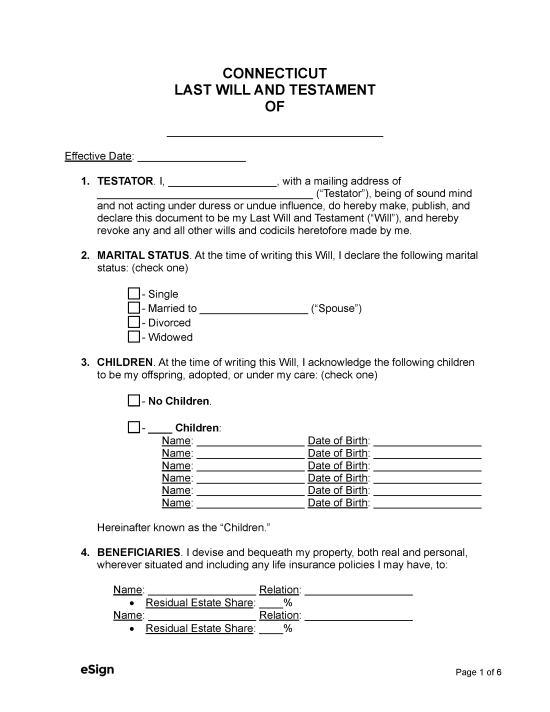
 Fill & Customize
 Basic Download
 Adobe PDF
 Microsoft Word
 OpenDocument
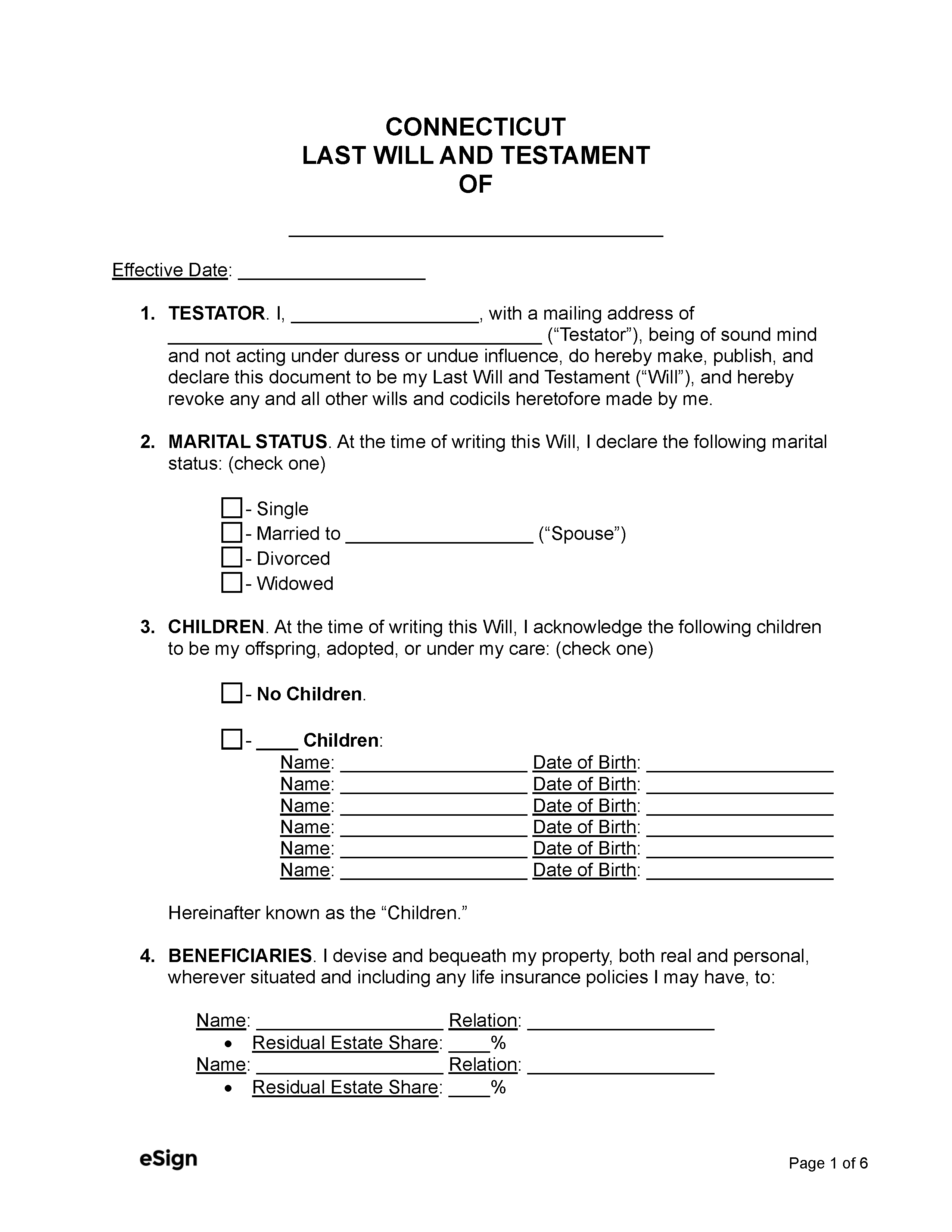
State Laws
- Minimum Age – 18[1]
- Signing Requirements – A will must be witnessed by two individuals who sign in the testator’s presence.[2]
- How to Revoke – The testator can burn, cancel, tear, or destroy their will to revoke it.[3] If a testator’s marriage ends before their death, any provisions in the spouse’s favor are automatically revoked.[4]
Probate in Connecticut
Within 30 days of learning of a decedent’s death, any person with the decedent’s will in their possession must deliver it to either:[5]
- The named executor
- The probate court with jurisdiction over the decedent’s last residence.
The executor has 30 days to apply for probate after the decedent’s death.[6]
Petition for Probate of Will
To begin the probate of a will, the executor named in the will must complete and file the Petition for Probate of Will (Form PC-200), along with the decedent’s original will and a certified copy of their death certificate with the local probate court.
Once completed and filed, the petitioner will need to deliver copies of the petition and will to all beneficiaries of the estate.[7]
Small Estates
Notice for Land Records
If the decedent’s estate contains any real property, the fiduciary must complete the Notice for Land Records Form (Form PC-251) and file it with the clerk for each Connecticut town where the decedent’s real estate is located (the form can be obtained from the court).[9] This must be completed within two months of the fiduciary’s appointment.
Resources
Forms
Links