
 Create Document
 Fill & Customize
 Basic Download
 Adobe PDF
 Microsoft Word
 OpenDocument
State Laws
Probate in Texas
Application for Probate of Will
To begin probate, the executor must obtain a hearing date by filing the following forms with the county clerk of the county where the decedent resided[4]:
- Application for Probate of Will and Issuance of Letters Testamentary
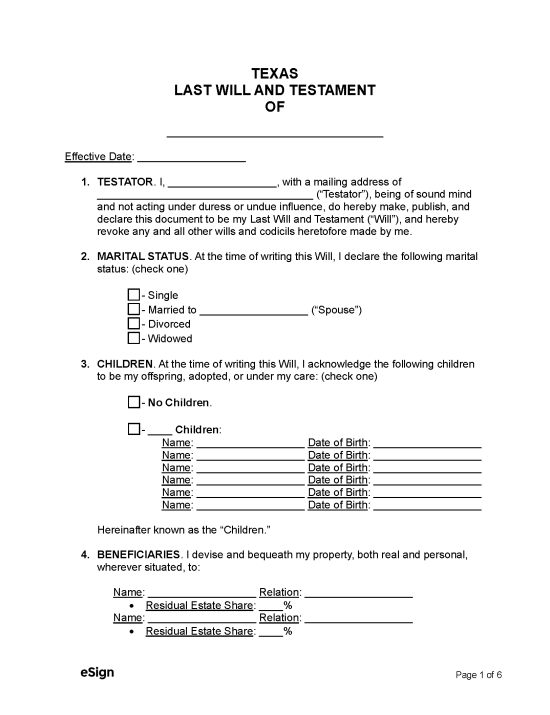
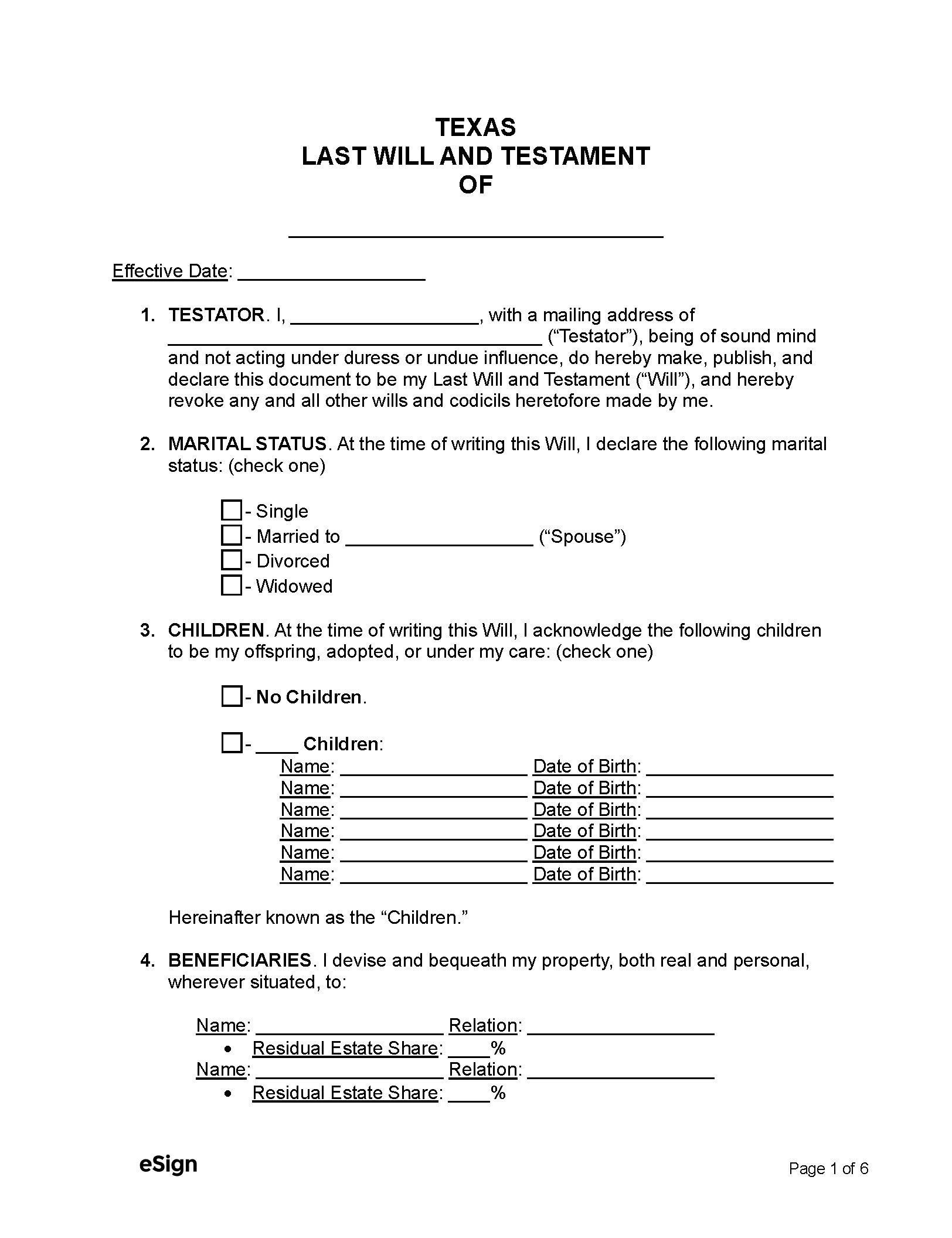
- Last Will and Testament
- Civil Case Information Sheet
At the hearing, the executor must bring a Proof of Death Testimony and obtain an Order Admitting Will to Probate and Letters Testamentary.[5] They must then publish a Notice to Creditors and Publisher’s Affidavit, give notice to creditors, and file the notices, proof of delivery, affidavits of notice, and Publisher’s Affidavit.[6]
The executor must give beneficiaries the Will, Order, and Notice to Beneficiaries, then file an Affidavit of Notice to Beneficiaries, Inventory, and List of Claims.[7] After paying estate debts and distributing assets, the executor must either file a Notice of Closing Estate (sent to beneficiaries) with proof of receipt or a Closing Report with distributee receipts.[8]
Small Estates
Estates with a total value of $75,000 or less, excluding certain exempt property, may bypass full probate by filing a Small Estate Affidavit.[9]