Colorado Petition for Change of Name

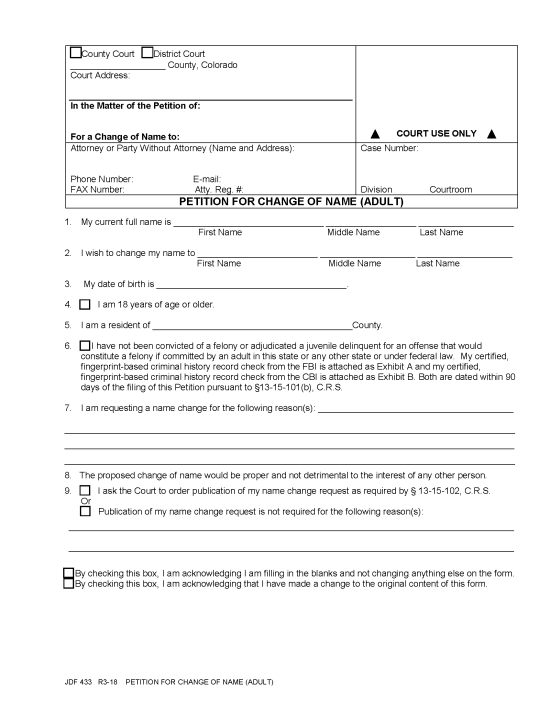
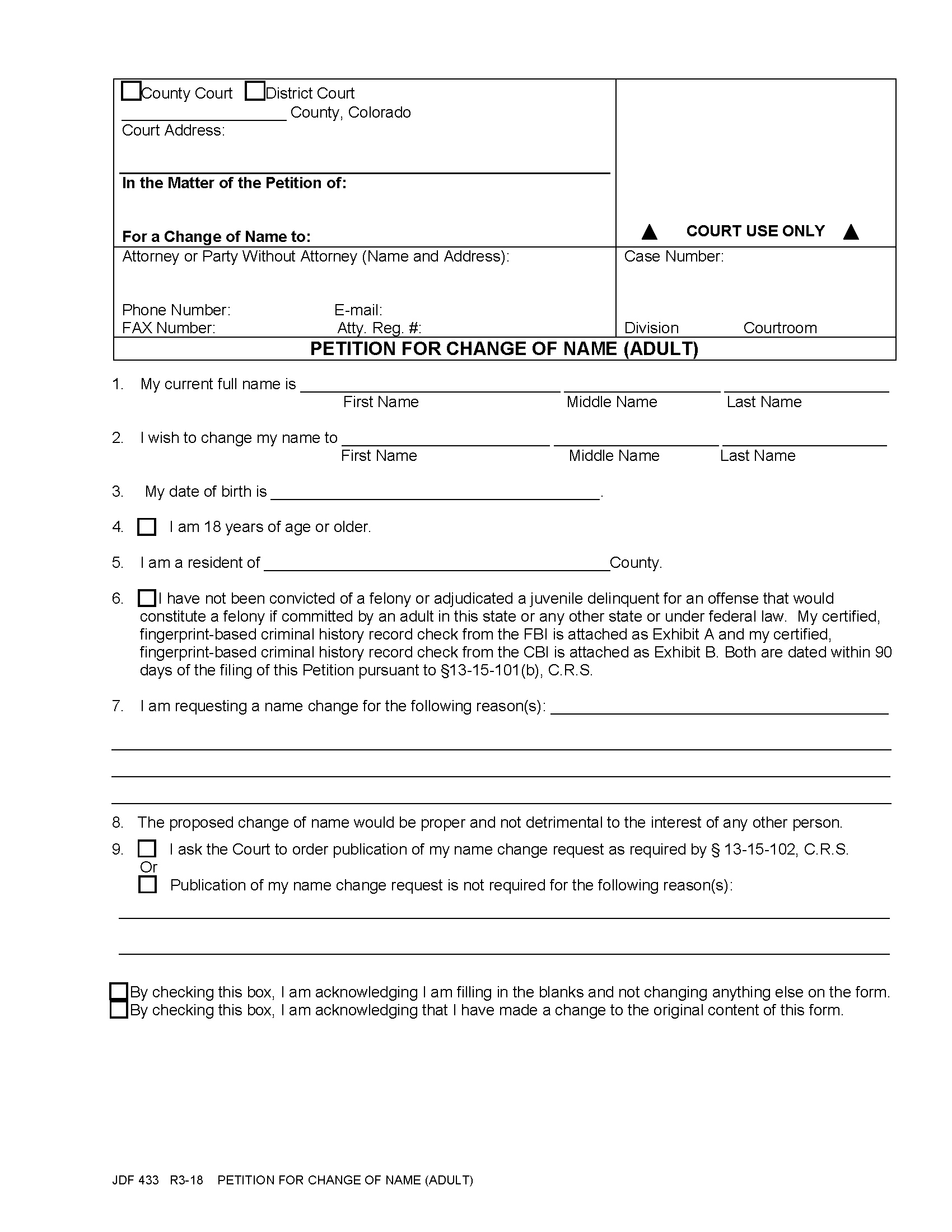
The Colorado petition for change of name is used to change a person’s name through a legal court process. The petition must state under oath that the petitioner is not a convicted felon and is not seeking to change their name for reasons that would negatively affect others. They must sign the name change petition in the presence of a notary public.

Colorado Petition for Change of Name

Last updated December 11th, 2025

The Colorado petition for change of name is used to change a person’s name through a legal court process. The petition must state under oath that the petitioner is not a convicted felon and is not seeking to change their name for reasons that would negatively affect others. They must sign the name change petition in the presence of a notary public.

Eligibility Requirements

  • Must be at least 18 years of age
  • If applicant is a minor, their parents must file
  • Must reside in the county of filing
  • Must complete a criminal background check 
  • Cannot be a convicted felon 
  • Cannot be detrimental to the interests of others

How to Legally Change a Name in Colorado

Step 1 – Background Checks

Name change petitioners must first complete a criminal history check by having their fingerprints taken and ordering background check reports through the Colorado Bureau of Investigation (CBI) and Federal Bureau of Investigation (FBI).

Step 2 – Complete Paperwork

The petitioner must fill out the following name change forms to be filed with the court:

Step 3 – File Documents

The name change forms and criminal history reports must be filed within 90 days of the petitioner receiving the background check reports. The petitioner must file with the county court where they reside and pay the appropriate filing fee.

Step 4 – Hearing (If Applicable)

Some counties will issue a notice scheduling a hearing, and the petitioner must appear on the specified date and time. The judge will review the paperwork and may waive publication if the petitioner is a victim of a crime/domestic abuse or the name change is to conform to their gender identity.

Step 5 – Publication

Unless waived by the judge, the Order for Publication for Change of Name form will be signed and sent to the petitioner. The petitioner must deliver a copy of the Order and the completed Public Notice to a local newspaper.
Publication must occur three times within a 21-day period, after which the newspaper will provide proof of publication.[2]

Step 6 – Name Change Decree

After the proof of publication is filed (or publication was waived) and the judge approves of the name change, they will complete and sign the Name Change Decree and send it to the petitioner.
The petitioner should request a certified copy of the Decree so they can update their name with applicable government agencies and institutions.

Marriage and Divorce

Anyone can change their name after marriage by entering the new name on their marriage license and submitting it to the county clerk or recorder. A certified copy of the license can be requested to update the person’s Social Security card and other IDs.

During divorce or legal separation proceedings, either party can file a Verified Motion and Affidavit (JDF 1824) to request their former name be restored. The court will grant the restoration, unless it is found to be detrimental to another person, by issuing an Order for Name Restoration (JDF 1825).[3]