
 Create Document
 Fill & Customize
 Basic Download
 Adobe PDF
Laws
- Maximum estate value: $75,000[1]
- Mandatory waiting period: 30 days[2]
- Where to file: County/Probate Court
How to File (3 Steps)
Step 1 – Qualifications
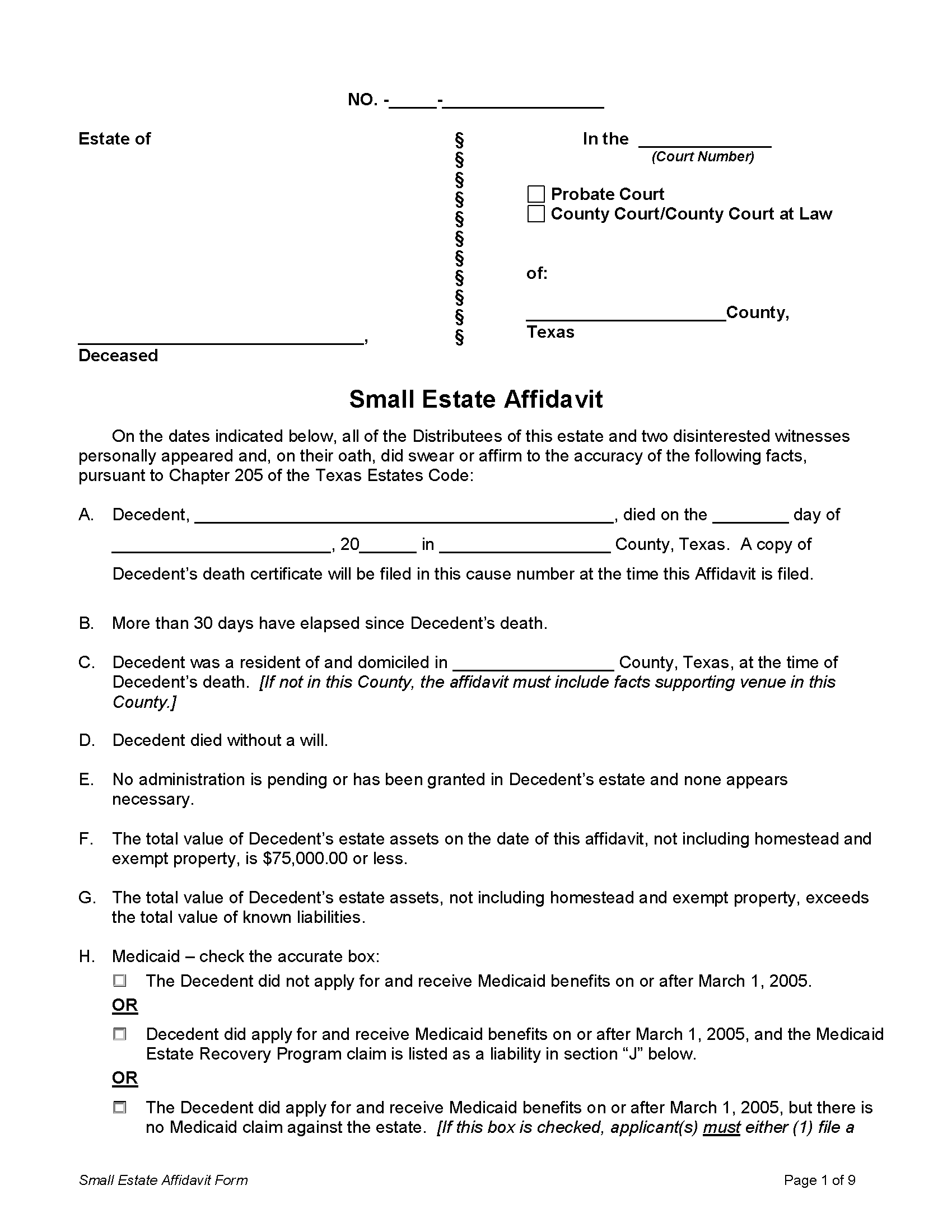
To qualify for the distribution of an estate through the Small Estate Affidavit, the following must apply[3]:
- The decedent left no will.
- 30 days have passed since the decedent’s death.
- No personal representative has been or is pending to be appointed.
- The estate value is $75,000 or less (minus homestead and other exempt property).
- No real property is included (except a homestead passed to spouse or minor children).
- Administration is not pending, granted, or appears necessary.
Step 2 – Complete Affidavit
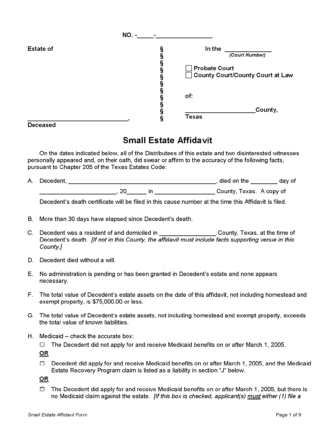
The Affidavit must be completed, signed by all distributees and two disinterested witnesses, and notarized.[4] The document must then be filed with the county or probate court.[5]
For vehicle transfers, the Affidavit of Heirship for a Motor Vehicle must be filed with the Texas DMV.
Step 3 – Distribute Assets
Once filed, a copy of the Affidavit must be given to parties in debt to the estate or holding estate assets, including fiduciary or transfer agents.[6] The estate can then be distributed as detailed in the Affidavit.
If transferring the decedent’s homestead, the Affidavit must be recorded with the deed records of the homestead’s county.[7]