
 Create Document
 Fill & Customize
 Basic Download
 Adobe PDF
How To Use (3 Steps)
Step 1 – Ensure Estate Meets Requirements
Collecting personal property via affidavit is only possible if the following statements are true[3]:
- The value of the entire estate, including contents of a safety deposit box, subtracting any liens and encumbrances, is not greater than $75,000.
- At least 30 days have elapsed since the decedent passed away or since their security deposit box inventory was filed.
- No petition or application has been submitted to the court to appoint a personal representative.
- Affiant (the person completing the affidavit) is the next rightful owner of the property.
Step 2 – Complete Affidavit
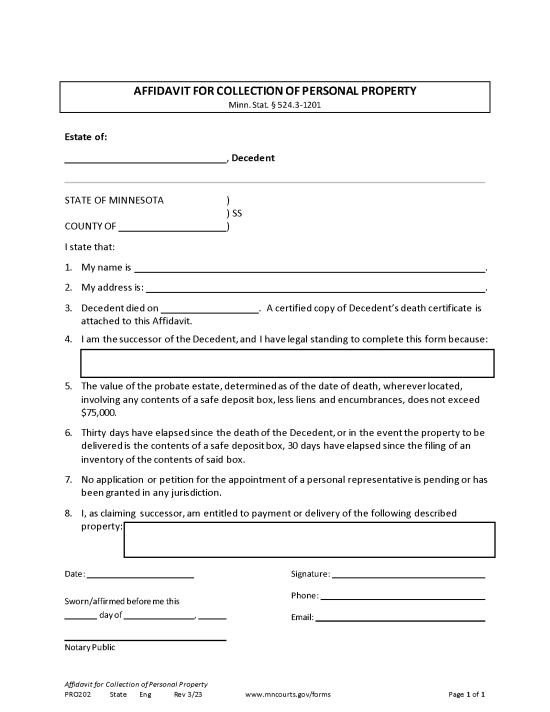
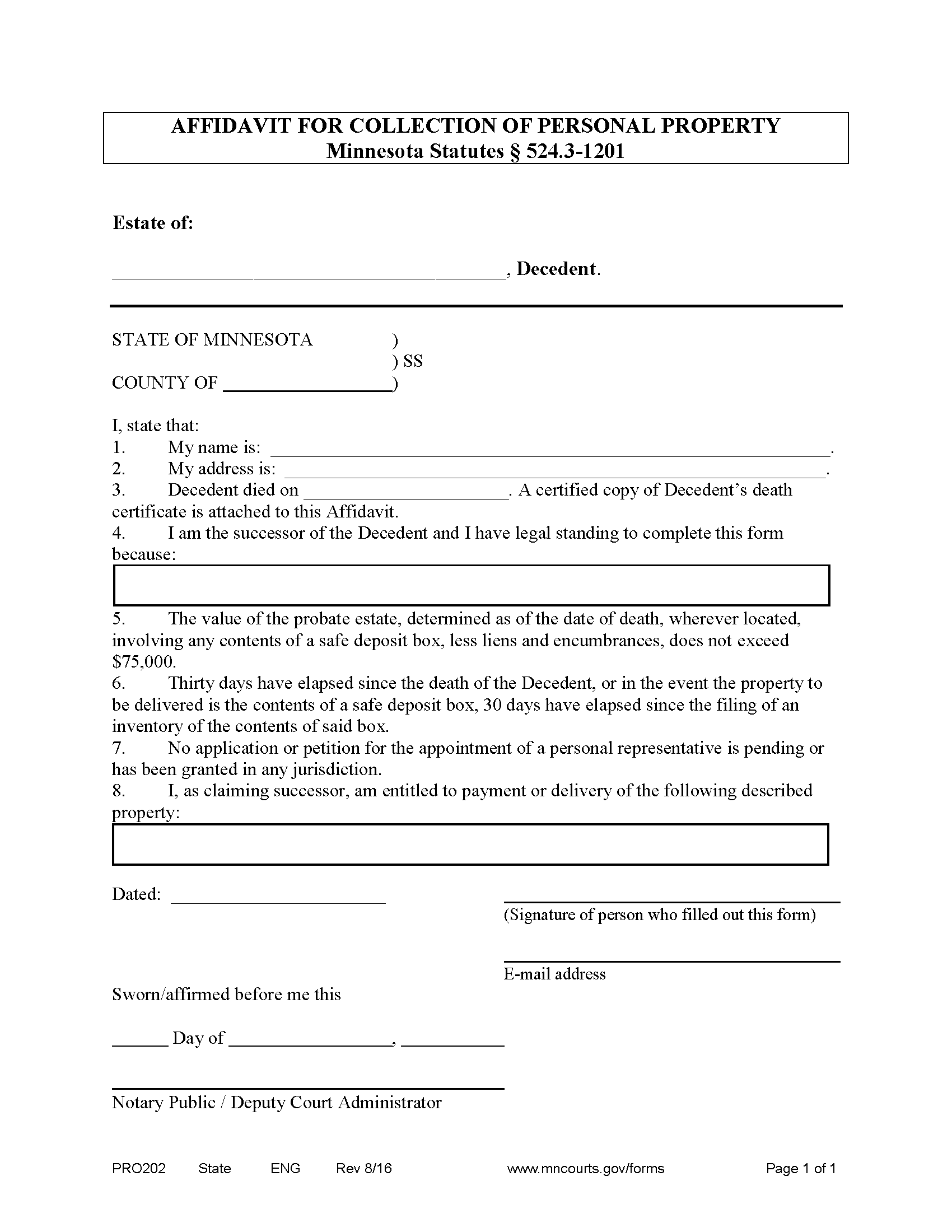
The affiant must complete the Affidavit for Collection of Personal Property and sign it in the presence of a notary public. A certified death record must be attached to the affidavit.
Step 3 – Collect Property
The notarized affidavit shall be presented to any person or entity holding the decedent’s personal property, who must then release the asset to the affiant.[4]
Note: Additional steps may be required if transferring ownership of a motor vehicle (see DVS website for instructions).