
 Create Document
 Fill & Customize
 Basic Download
 Adobe PDF
Laws
- Maximum Estate Value: $50,000[1]
- Mandatory Waiting Period: None[2]
- Where to File: Surrogate Court
How to File (5 Steps)
Step 1 – Check Requirements
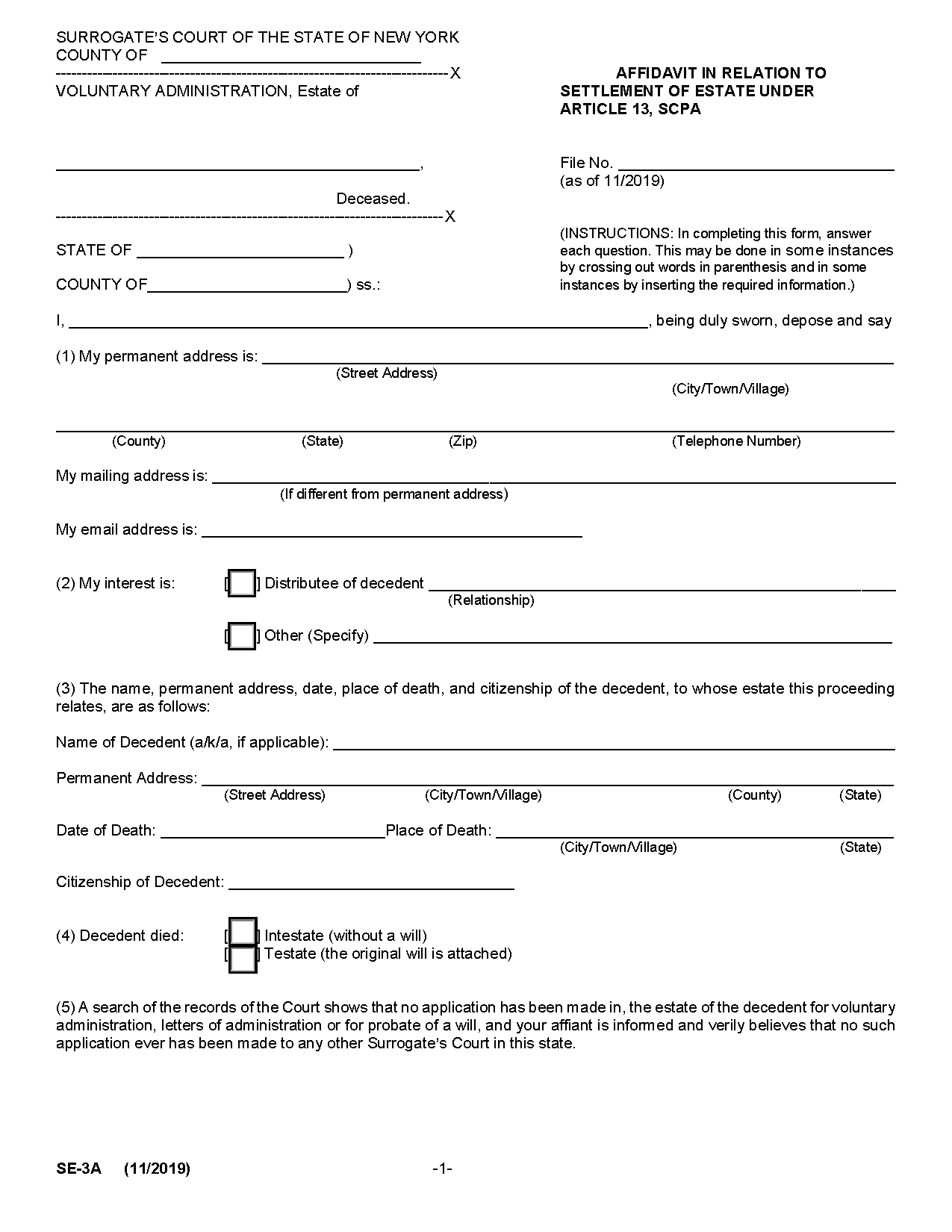
An Affidavit in Relation to Settlement of Estate Under Article 13 can be used if the estate’s total value is $50,000 or less and the decedent did not own real estate solely in their name. There are certain exemptions to the estate value if the decedent left a surviving spouse and/or children under 21.
The affidavit cannot be used if another application for a voluntary administration or letters of administration has already been made.
Step 2 – Gather and Complete Documents
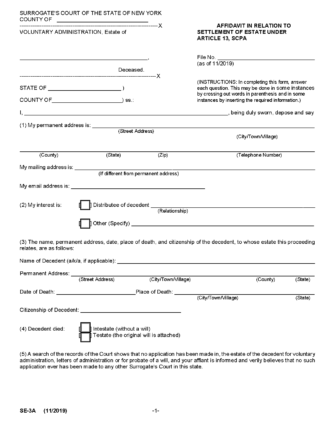
If the decedent left a will, the executor will complete the Affidavit and have it notarized. If the decedent died without a will, the document will usually be completed by the closest distributee.[3] The form can be completed online and printed for filing.[4]
If the decedent had one distributee, if the distributees are part of the decedent’s extended family, or if there are no distributees, a Family Tree Affidavit must be completed and signed before a notary.[5]
The voluntary administrator can use this checklist to verify that all requirements are met prior to filing.
Step 3 – File Documents
The notarized Affidavit, death certificate, original will (if one exists), and Family Tree Affidavit (if necessary) must be filed with the court clerk in the county where the decedent lived.
After the documents are filed, the clerk will mail each distributee and beneficiary a notice of the proceeding.[6] The court will provide the voluntary administrator with a certificate for each property or liability listed in the affidavit so that they may be collected.[7]
Step 4 – Collect Debt and Assets
The certificate will allow the voluntary administrator authority to collect the decedent’s debt and assets. Any funds received through the affidavit must be put into an estate bank account in a New York financial institution.[8] The estate’s administration, funeral expenses, and debts will be settled using the estate’s assets.
A record of all receipts and distributions made must be kept.