
 Create Document
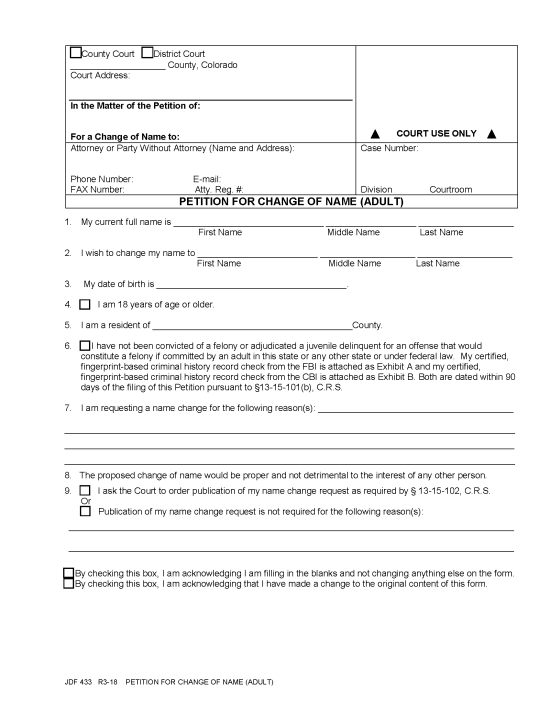
 Fill & Customize
 Basic Download
 Adobe PDF
Eligibility Requirements
- Must be at least 18 years of age
- If applicant is a minor, their parents must file
- Must reside in the county of filing
- Must complete a criminal background check
- Cannot be a convicted felon
- Cannot be detrimental to the interests of others
Prior Felons
Individuals who have been convicted or charged with a felony can still apply for a name change using the Petition for Name Change for a Prior Felon form. The court may approve the name change, provided that specific requirements are met.[1]
How to Legally Change a Name in Colorado
Step 1 – Background Checks
Step 2 – Complete Paperwork
The petitioner must fill out the following name change forms to be filed with the court:
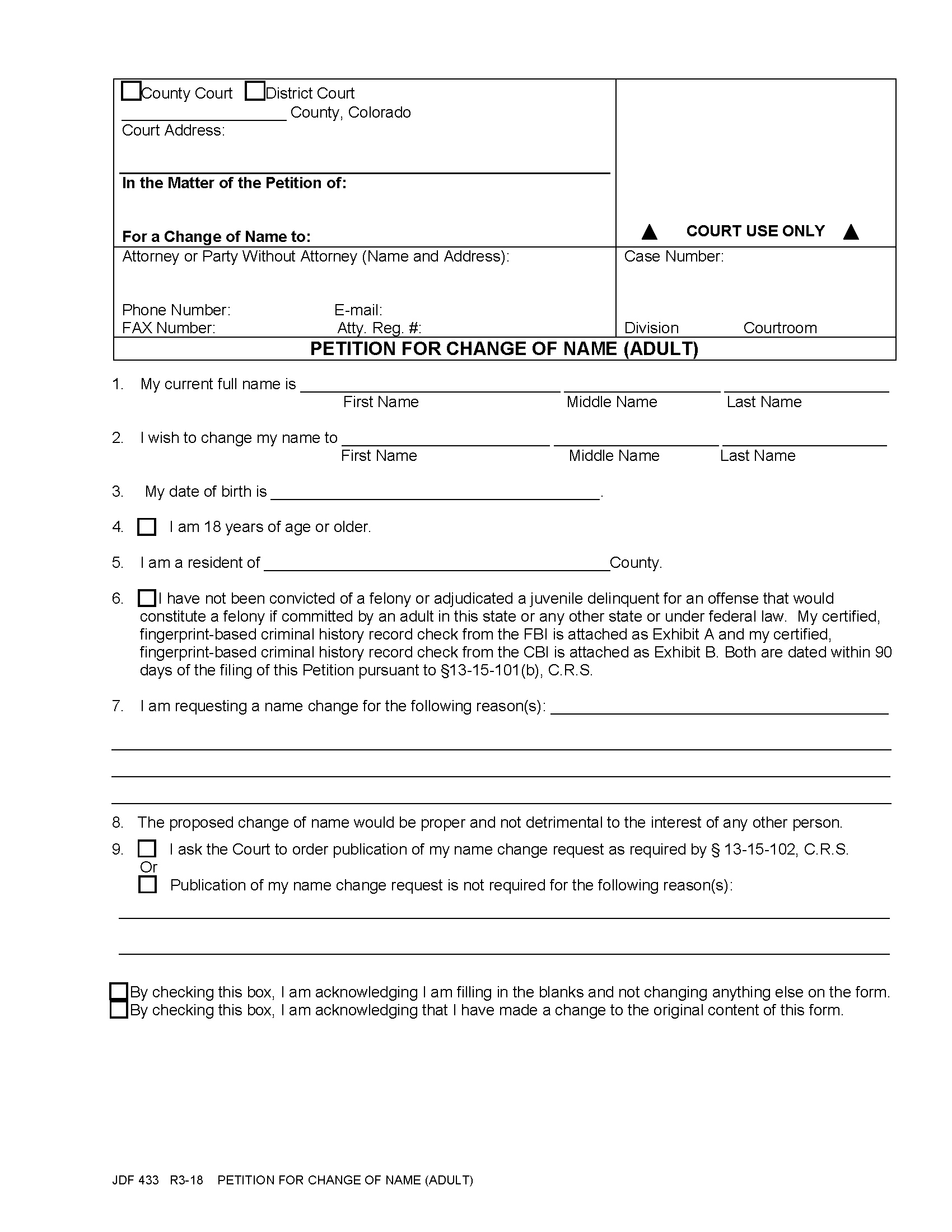
- Petition for Change of Name (JDF 433)
- Order for Publication (JDF 426) (Case Caption Only)
- Public Notice (JDF 427)
- Name Change Decree (JDF 448) (Case Caption Only)
Step 3 – File Documents
Step 4 – Hearing (If Applicable)
Step 5 – Publication
Step 6 – Name Change Decree
Marriage and Divorce
Anyone can change their name after marriage by entering the new name on their marriage license and submitting it to the county clerk or recorder. A certified copy of the license can be requested to update the person’s Social Security card and other IDs.
During divorce or legal separation proceedings, either party can file a Verified Motion and Affidavit (JDF 1824) to request their former name be restored. The court will grant the restoration, unless it is found to be detrimental to another person, by issuing an Order for Name Restoration (JDF 1825).[3]