
 Create Document
 Fill & Customize
 Basic Download
Eligibility Requirements
- Reside in the Massachusetts county where filing
- Be at least 18 years old
How to Legally Change a Name in Massachusetts
Step 1 – Prepare Documents
The petitioner will need to gather and complete the following documents:
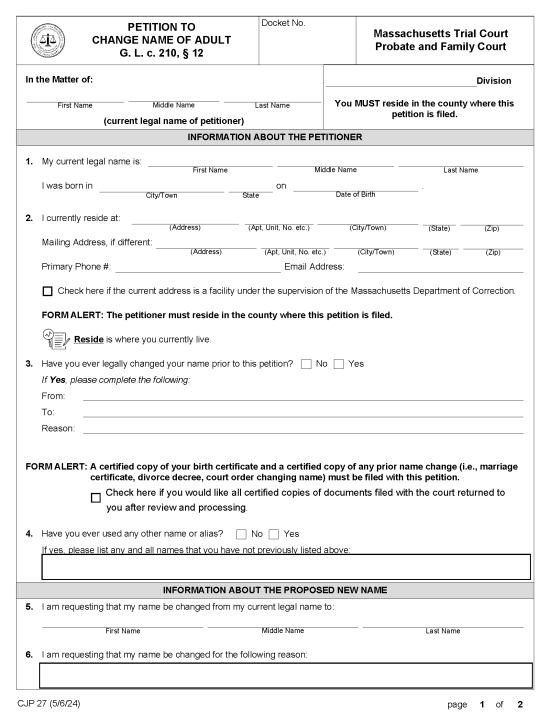
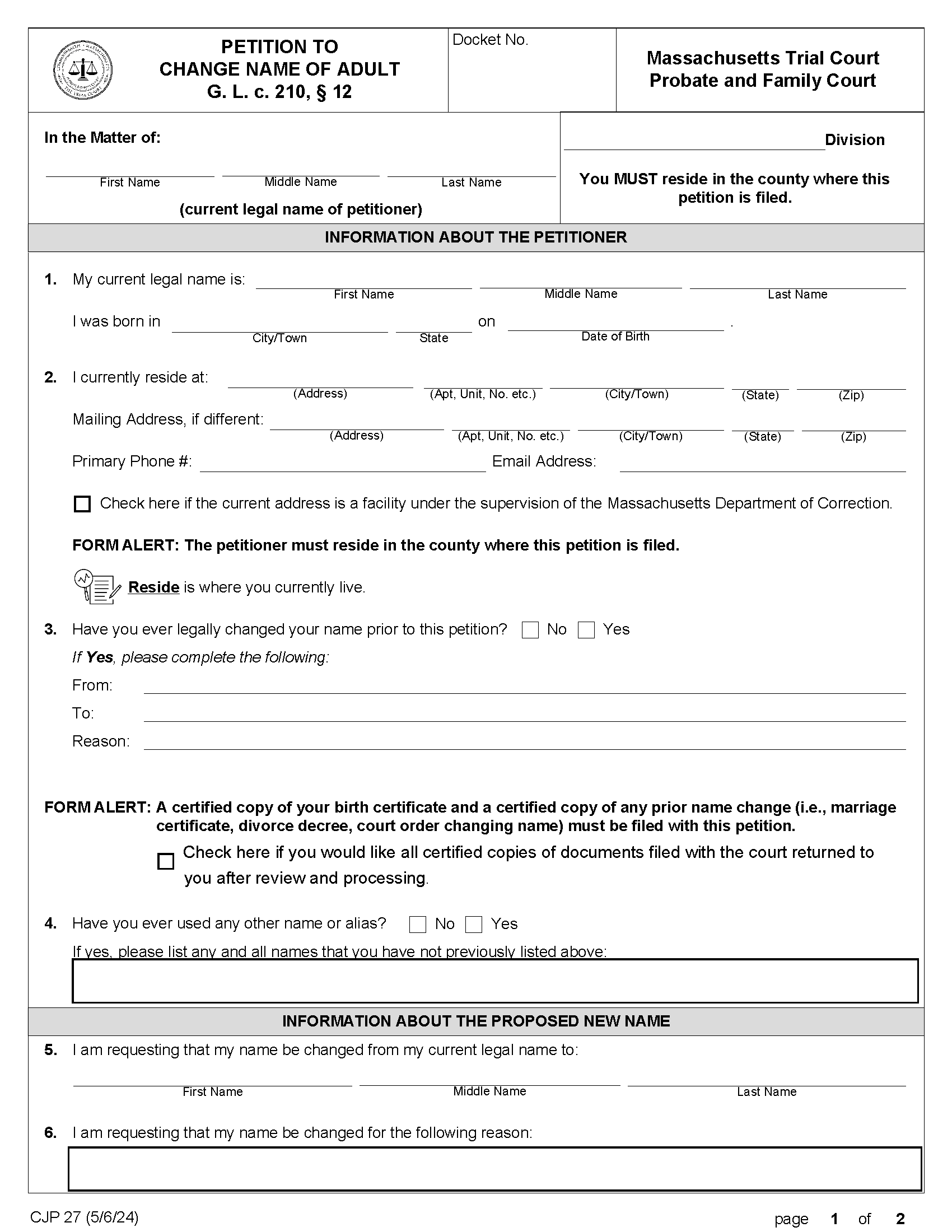
- Petition to Change Name of Adult (CJP 27) – Signed before a notary public.
- Court Activity Record Information / Warrant Management System Release Request (CJP 34)
- A certified copy of their birth certificate[1]
If the petitioner has had a prior name change, they will need a certified copy of the document reflecting the change, such as a marriage certificate, divorce decree, or certificate of naturalization.
Step 2 – File Forms
The petitioner must file their documents with the Probate and Family Court serving the county where they live.[2] This can be done in person, by mail, or online.
The filing fee is $165 (as of this writing). Petitioners who can’t afford the fee may be able to have it waived by filing an Affidavit of Indigency (also possible online).[3]
The court will review the case and decide whether to grant the name change right away or if the petitioner must provide notice and/or attend a hearing.
Step 3 – Give Notice (If Required)
In many cases, the court will require that the public or interested persons be notified before allowing a name change. If this is the case, they will issue an Order of Notice (CJ-P 130) and/or a Citation on Petition for Change of Name (CJ-P 28) and provide instructions on how to give proper notification.
The petitioner may file a Motion (CJD 400) to request a waiver of the newspaper notice requirement.
Step 4 – Go To Hearing (If Required)
The court may approve the name change request at this point. Otherwise, notice will be mailed to the petitioner stating when and where their hearing will take place. The petitioner will be required to bring a copy of all submitted documents and justify their position in court.
Once the judge approves (whether after the petition is filed, the proof of service is submitted, or the hearing is held), they will mail a Certified Decree of Change of Name to the petitioner.
Marriage and Divorce
- Marriage – Individuals enter their new name when filling out their marriage license.
- Divorce – Maiden names can be restored during divorce by requesting it in one of the following:
Resources
Forms
- Petition to Change Name of Adult (CJP 27)
- Court Activity Record Information / Warrant Management System Release Request (CJP 34)
- Affidavit of Indigency
- Motion (CJD 400)
- Order of Notice (CJ-P 130)
- Citation on Petition for Change of Name (CJ-P 28)
- Certified Degree of Change of Name
- Divorce Decree
Links