
 Create Document
 Fill & Customize
 Basic Download
 Adobe PDF
Eligibility Requirements
- Minnesota resident for at least six months
- At least 18 years old
- If a minor, a parent/guardian/next of kin must file a notice of application
How to Legally Change a Name in Minnesota
Step 1 – Fill Out Forms
First, the applicant will need to complete the following three documents:
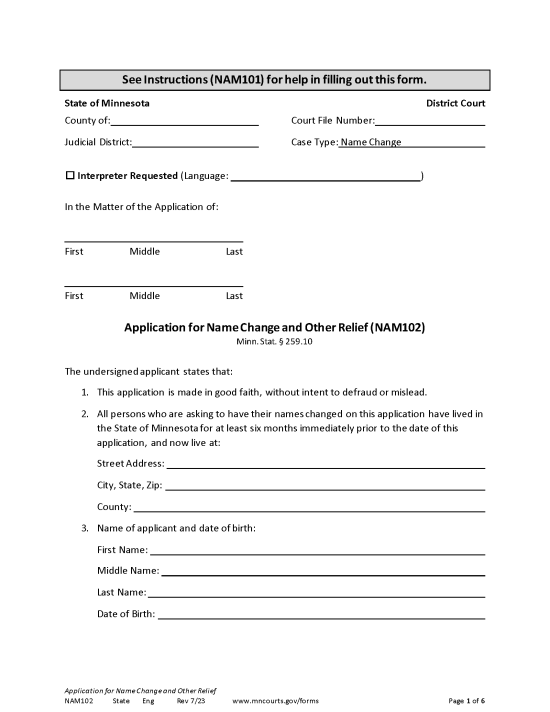
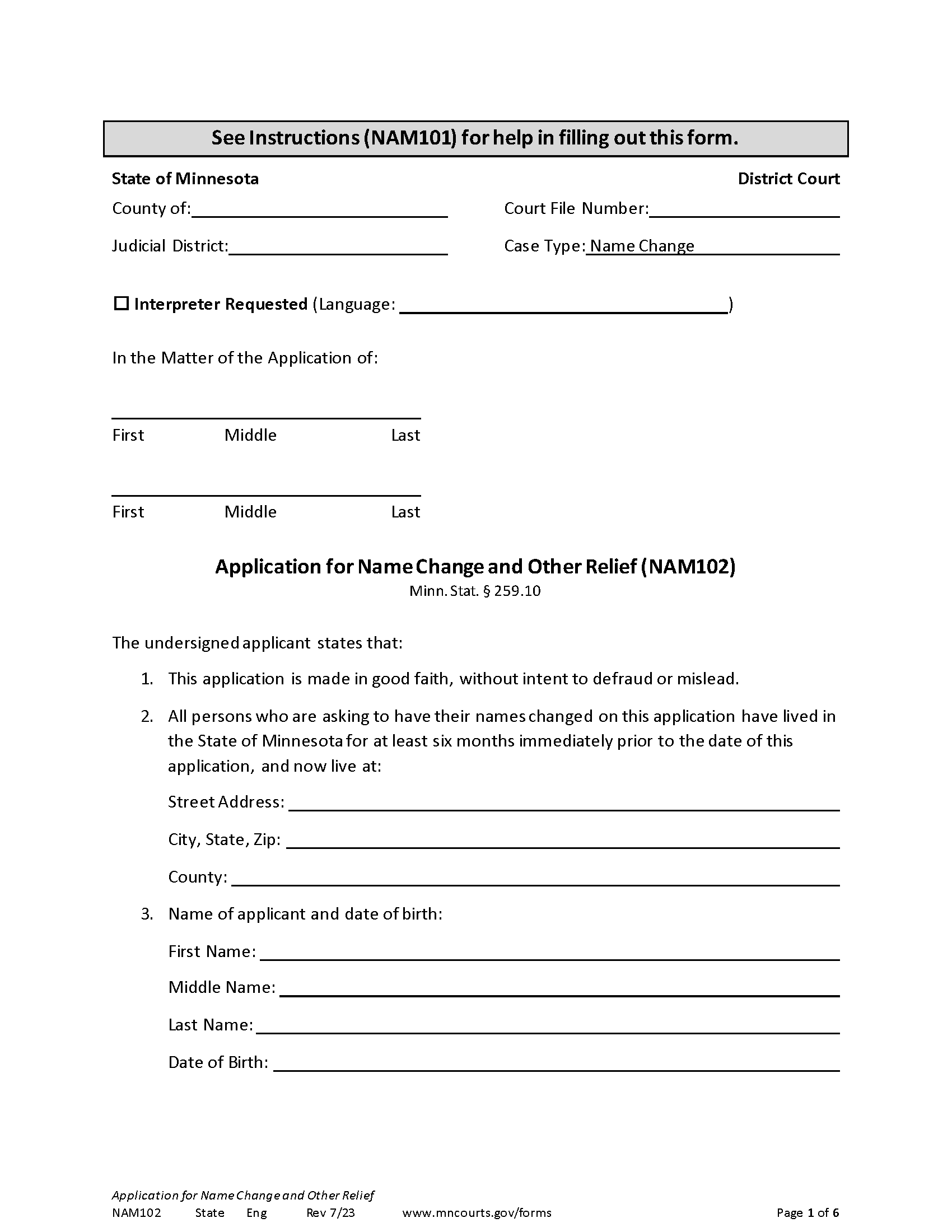
- Application for Name Change and Other Relief
- Criminal History Check Release
- Proposed Order Granting Name Change – Only fill out above the “IT IS ORDERED” section.
Step 2 – File Forms
The original documents may be filed online or in person at the applicant’s local district court, along with the appropriate filing fee.[1] Those who cannot afford the filing fee may request that it be reduced or waived by filing the Affidavit for Proceeding In Forma Pauperis (IFP 102) form.[2]
Step 3 – Go to Hearing
The applicant will be given a hearing date, scheduled by the Court Administrator’s Office. On the date of the hearing, two witnesses must accompany the petitioner to verify their identity. If the name change is approved, the judicial officer will sign the Order Granting Name Change.
Step 4 – Get Certified Copies
The applicant will need to get certified copies of the Order to change their personal records. If the applicant, their spouse, or their children have an interest in land, a copy of the document must be filed with the county recorder where the land is located.[3]
Marriage and Divorce
Individuals getting married may change their name with their marriage license.[4] After the wedding, the marriage license with a certified date or a certified marriage certificate can be used to update the individual’s name with the Social Security Agency, government agencies, banks, etc.
Those getting a divorce may request a name change as part of their final decree of dissolution or legal separation.[5]