
 Create Document
 Fill & Customize
 Basic Download
 Adobe PDF
Eligibility Requirements
- At least 18 years old
- Petitioner must be a resident of the county where filing
How to Legally Change a Name in New Jersey
Step 1 – Complete Court Documents
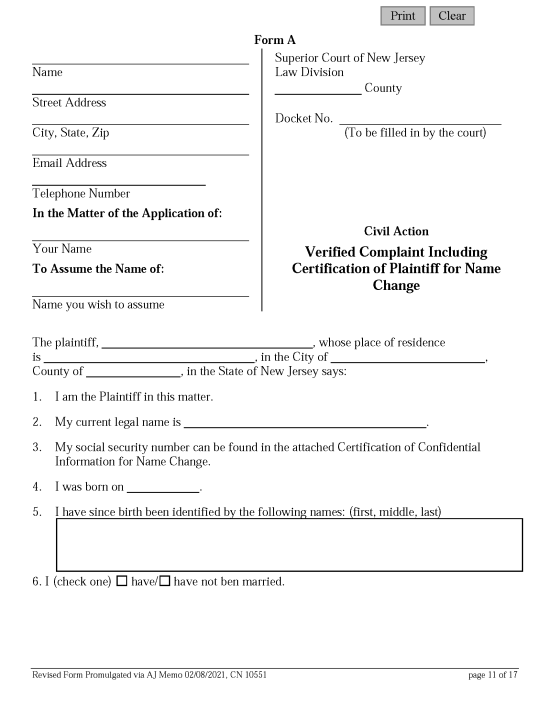
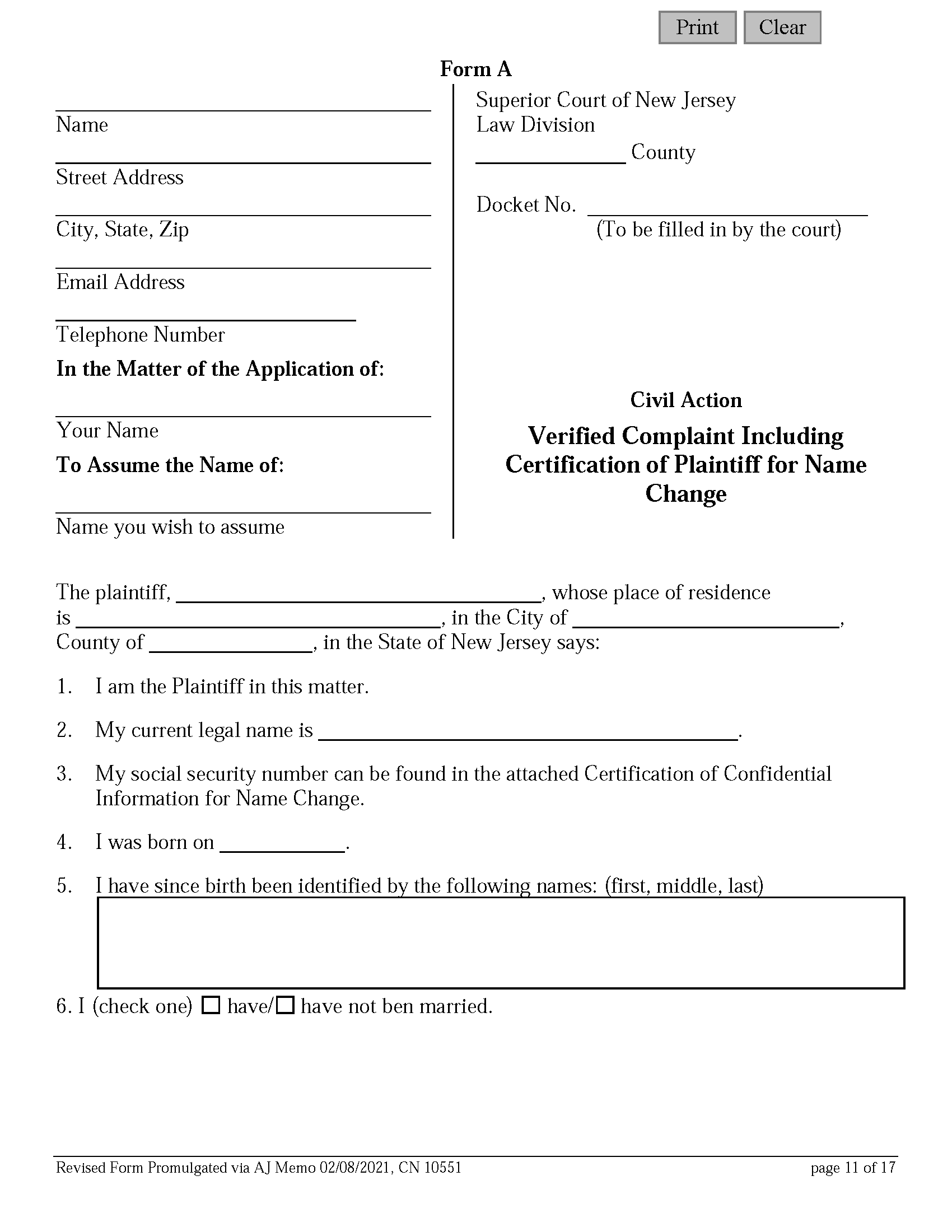
The plaintiff must complete the first five forms found in the How to Ask The Court to Change Your Name (Adults Only) packet. Additionally, the Civil Case Information Statement (CIS) must be completed to summarize the case for the court.
To change the name of a minor, the How to Change a Name in the Chancery Division, Family Part packet should be used.
Step 2 – File Documents
When the forms are completed, the plaintiff must send the paperwork to the local Superior Court. This can be done online, in person, or by mail.
Individuals applying by mail or in person must ensure they:
- Remove all instruction sheets.
- Submit the original of each form along with one copy.
- Provide a self-addressed stamped envelope for return documents.
- Include a check or money order made out to Treasurer, State of New Jersey, with the filing fee ($250 at the time of this writing).
Individuals unable to pay the fee may file an Application for Fee Waiver.
Step 3 – Review Returned Documents
The court will send the plaintiff copies of the Verified Complaint, Certification of Confidential Information for Name Change, and Order Fixing Date of Hearing.
Step 4 – Notify State
The plaintiff must send via certified mail (return receipt requested) a copy of the Order Fixing Date of Hearing to the Director of the Division of Criminal Justice no later than 20 days before the hearing. Those with pending criminal charges must also include a copy of the Verified Complaint and Certification of Confidential Information for Name Change.
Step 5 – Proof of Mailing (if applicable)
Step 6 – Hearing
Step 7 – Notify Departments
When the name change is approved, the plaintiff will need to send certified copies (with a raised seal) of the Final Judgement and Final Judgement Addendum to the:
- Department of Treasury – by mail, within 45 days of the judgment.
- Registrar of Vital Statistics in the state where the plaintiff was born.
- Motor Vehicles Commission – in person, within two weeks of the final judgment.[1]
Individuals can request certified copies of the documents via the Judiciary Electronic Document Submission (JEDS).
Other agencies, such as the Social Security Administration (informed by submitting the SS-5 form), must also be notified of the name change.
Marriage and Divorce
If an individual wants to adopt their new spouse’s last name, they must indicate it on their marriage license application. After the wedding, certified copies of the marriage certificate are needed to change the name officially.
An individual may request that the court restore their surname by filing a motion during or following the divorce proceedings.[2]
Resources
Forms
- New Jersey Name Change Packet
- Verified Complaint
- Certification of Confidential Information for Name Change
- Order Fixing Date of Hearing
- Final Judgement
- Final Judgement Addendum
- How to Change a Name in the Chancery Division, Family Part
- Civil Case Information Statement (CIS)
- Application for Fee Waiver
Links