
 Create Document
 Fill & Customize
 Basic Download
 Adobe PDF
Laws
- Maximum Estate Value: $40,000[1]
- Mandatory Waiting Period: 30 days[2]
- Where to File: Probate Court[3]
How to File (5 Steps)
Step 1 – Verify Small Estate Criteria
Before filing, the person who files the affidavit, called the “affiant,” must verify that the estate satisfies the following conditions[4]:
- At least 30 days have passed from the date of death.
- The value of the decedent’s property does not exceed $40,000, less liens, debt, and encumbrances.
- If the decedent left a will, the will has been admitted into probate within the required time restrictions.[4]
Step 2 – Estate Bond
Step 3 – File Affidavit
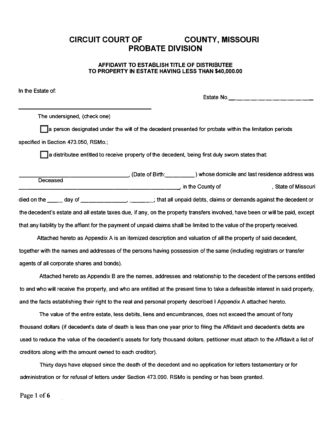
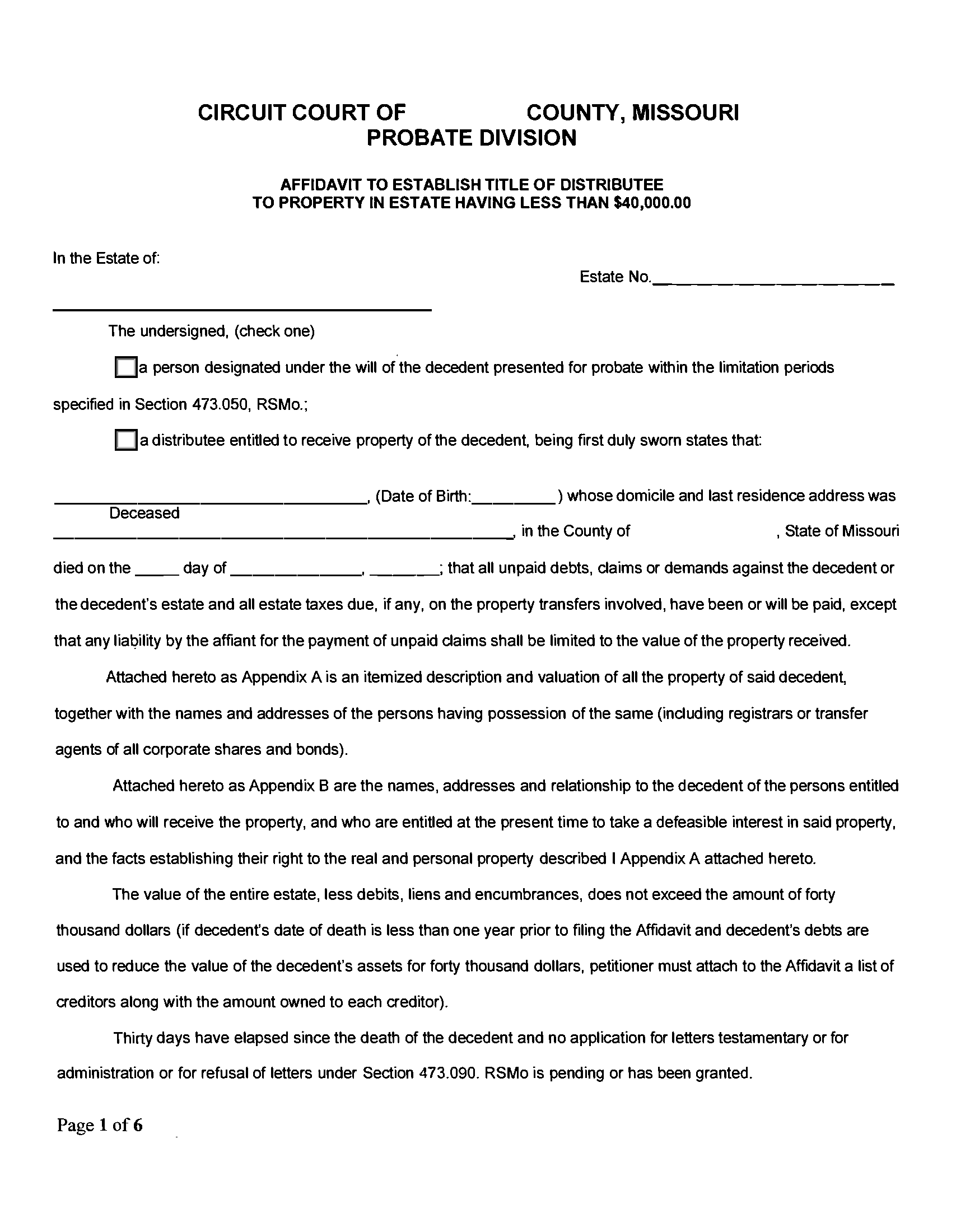
The affiant must fill out the Affidavit to Establish Title of Distributee and provide their signature in the presence of a notary public. The following must be attached to the affidavit:
- Death certificate;
- Confidential Case Filing Information Sheet;
- Funeral bill with proof of payment; and
- Verification of property owned by the decedent (e.g., titles, certificates).
The above documents must be submitted to a clerk of the Probate Court. Once approved, the clerk will attach a certificate stating specific facts about the estate. The clerk will then provide the affiant with copies of the affidavit and certificate.
Note: If all heirs agree to waive the bond requirement, each heir must sign a separate motion requesting that the bond be waived. (This motion is included in the Affidavit to Establish Title of Distributee.)
Step 4 – Publish Notice
If the value of all property in the estate exceeds $15,000, the probate clerk must publish a notice to inform creditors of their right to claim any unpaid debt. This publication shall be made in a local newspaper once per week for two (2) consecutive weeks. After completion of publication, a proof of publication document must be filed with the court within ten (10) days.
Step 5 – Collect Assets
After the affidavit has been approved, the affiant will be permitted to collect the decedent’s property and transfer it to the heirs. Personal property can be obtained from the custodian of said property, who must release the asset upon receipt of the affidavit. To transfer real estate ownership, the heirs must file a copy of both the affidavit and the clerk’s certificate with the recorder of deeds.
If the decedent owned a vehicle but didn’t name a Transfer on Death (TOD) beneficiary, the heir will need to file a title application (Motor Vehicle – Watercraft) with the Department of Revenue. They will also need to file the existing certificate of title, a copy of the small estate affidavit, and the applicable filing fee (see FAQ for more info).