
 Create Document
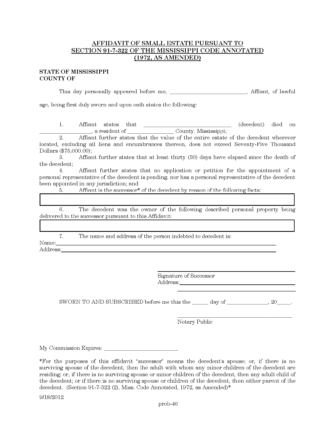
 Fill & Customize
 Basic Download
 Adobe PDF
How to Use (4 Steps)
Step 1 – Check Requirements
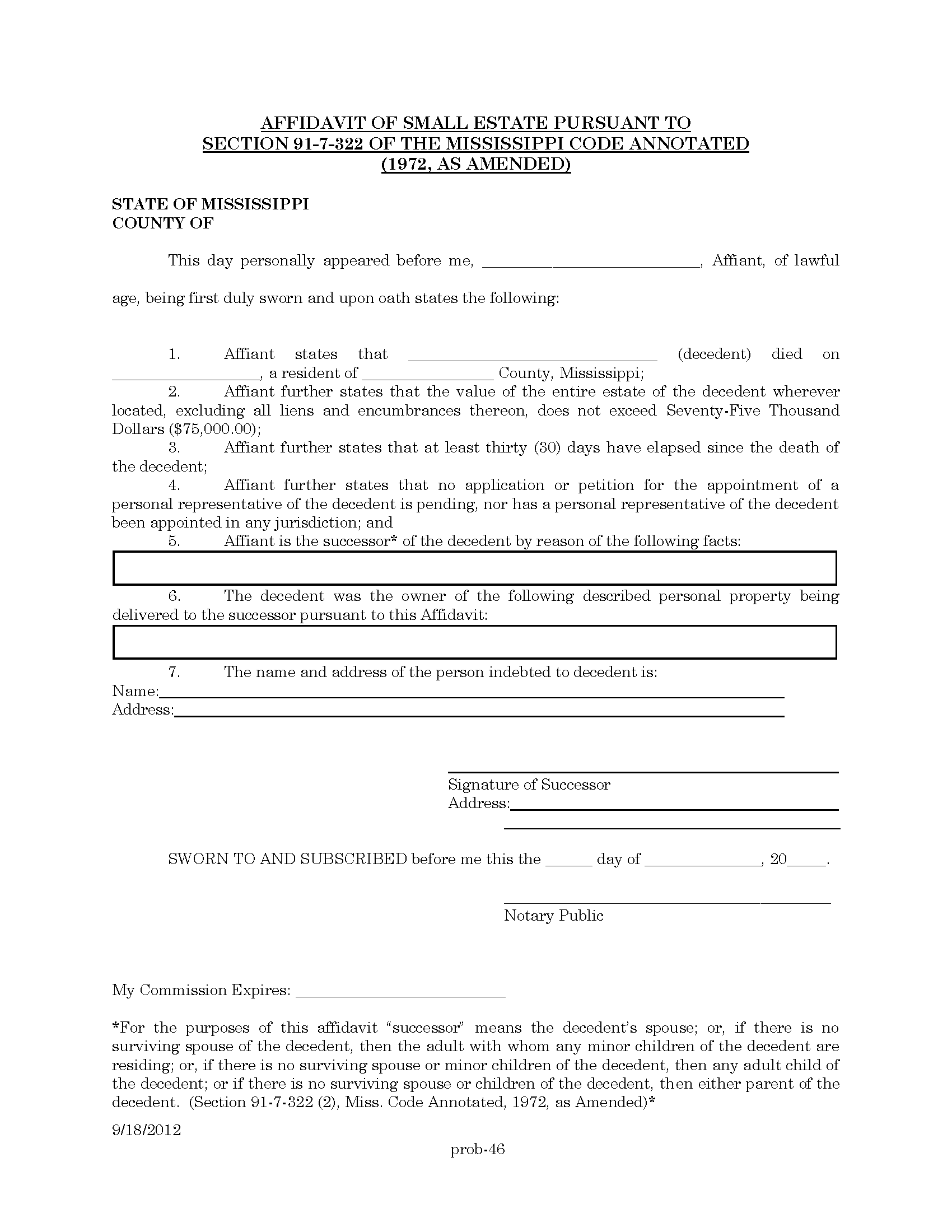
An Affidavit of Small Estate can be used to claim personal property left by the decedent so long as the estate satisfies the following requirements[3]:
- The decedent has been deceased for at least thirty 30 days.
- The total value of the decedent’s assets is not greater than $75,000, excluding all liens and encumbrances.
- A personal representative has not been designated by the court, and no application or petition for appointment is pending.
Step 2 – Determine Successorship
The person who drafts the affidavit (“affiant”) must be a successor to the property they intend to collect. The order of succession is as follows[4]:
- The surviving spouse;
- If no surviving spouse, then the decedent’s children;
- If no surviving spouse or children, then the decedent’s grandchildren; or
- If no surviving spouse, children, or grandchildren, then either of the decedent’s parents or any sibling.
Step 3 – Prepare Affidavit
The affiant must complete the Affidavit of Small Estate and sign the form in the presence of a notary public. If there are multiple successors, an affidavit must be signed and notarized by each additional individual.
Ownership of a vehicle may be transferred by filing an Affidavit of Heirship for Motor Vehicle with the local County Tax Collector.[5]
Step 4 – Collect Property
When presented with the affidavit, the individual or institution holding the asset must transfer the property or payment to the affiant.