
 Create Document
 Fill & Customize
 Basic Download
 Adobe PDF
How to Use (3 Steps)
Step 1 – Check Eligibility
The estate must meet the following requirements to be eligible for a small estate affidavit[4]:
- The estate’s total value does not exceed $100,000.
- The estate contains no real property.
- There is no ongoing or completed probate case for the estate.
- At least 30 days have passed since the decedent’s death.
- There is no pending or granted petition for the appointment of a personal representative.
- The affiant is entitled to the property.
Step 2 – Complete Affidavits
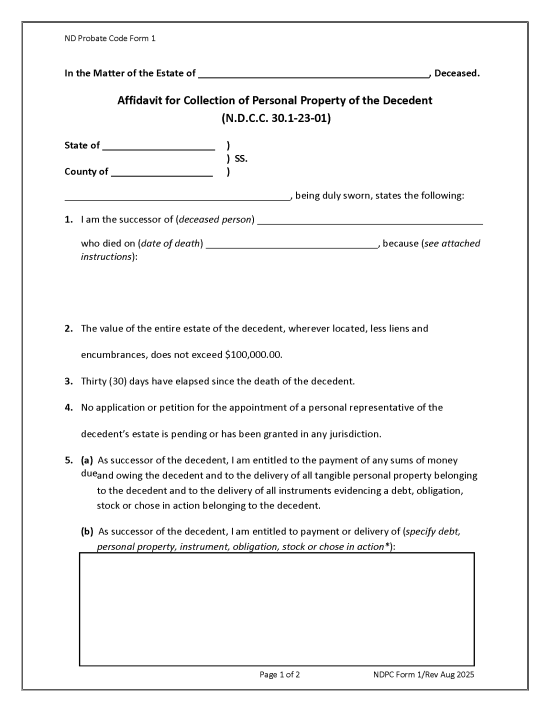
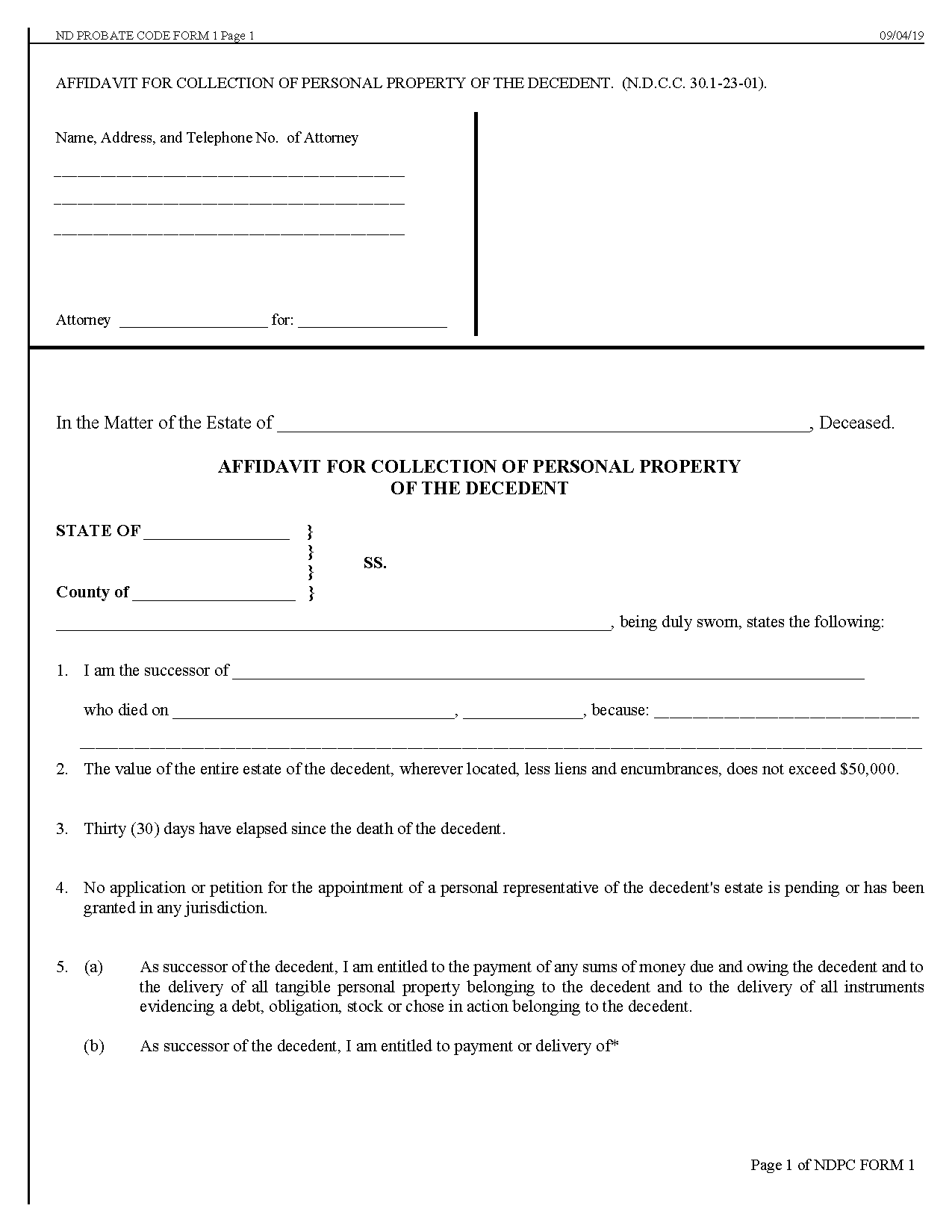
The affiant must complete the Affidavit for Collection of Personal Property of the Decedent. The document must be signed in the presence of a notary public.
To collect motor vehicles, the affiant will also need to complete and notarize the Affidavit for Collection of Personal Property of the Decedent (Form SFN 2916). The form must be filed at a North Dakota Motor Vehicle office.
Step 3 – Collect Property
The affiant can present the Affidavit to any party holding estate property, who, in turn, will be legally required to transfer it to the affiant.
Legal action may be brought against a party who refuses to transfer the decedent’s property.[5]