
 Create Document
 Fill & Customize
 Basic Download
 Adobe PDF
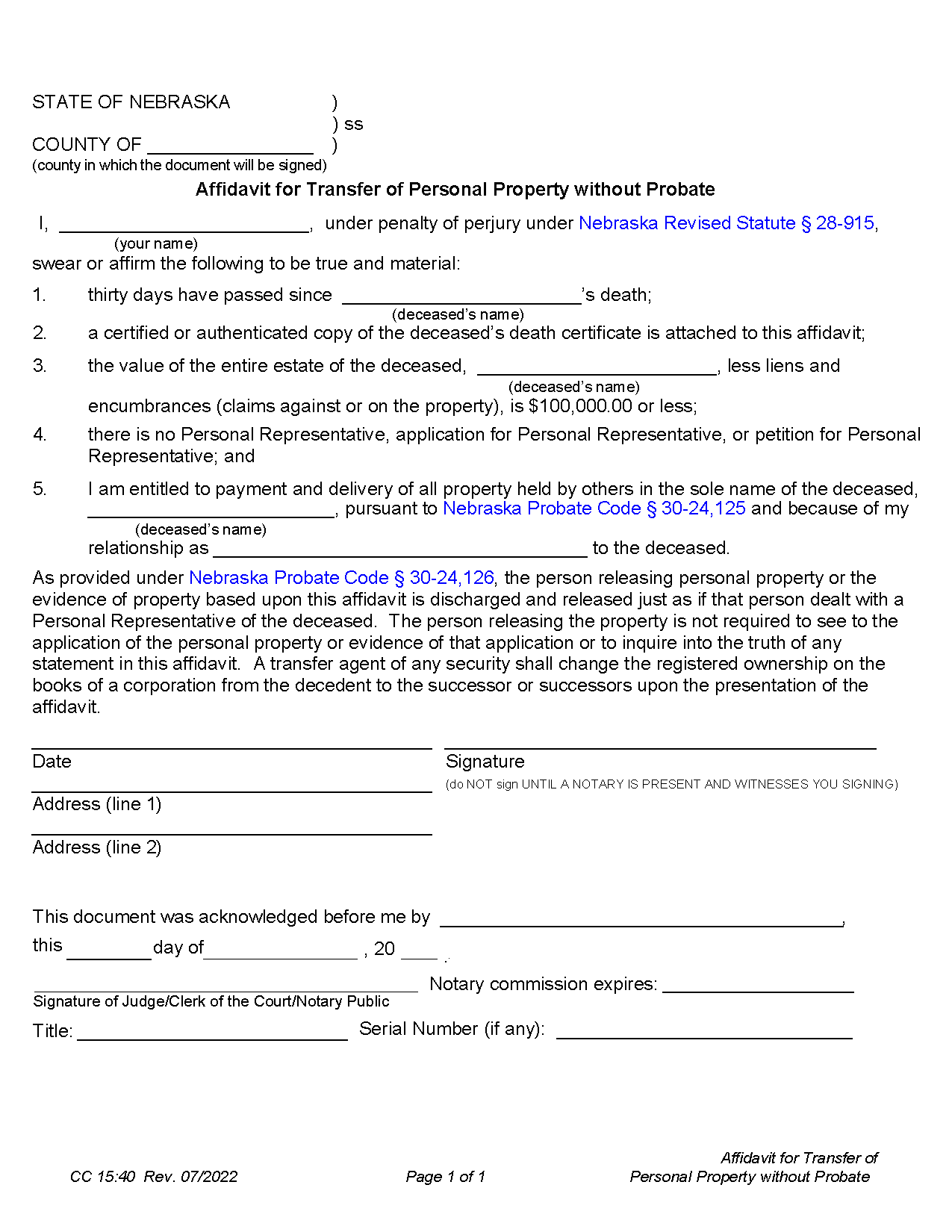
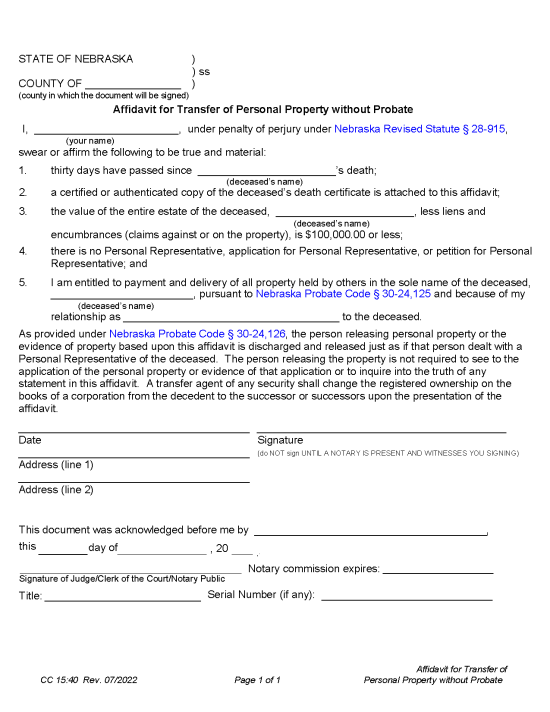
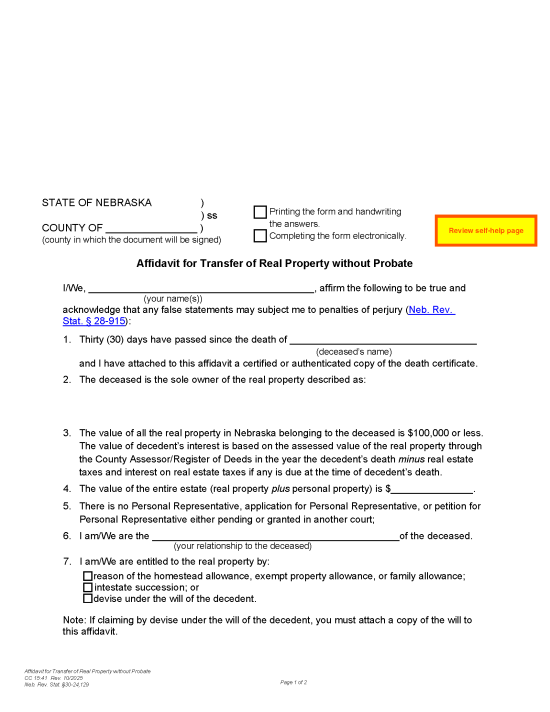 Nebraska Small Estate Affidavit (Real Estate) – For transferring a decedent’s real property (if valued at $100,000 or less) to a successor without probate.
Download: PDF
How to Use (3 Steps)
Step 1 – Verify Requirements
- The value of the estate is $100,000 or less, not counting liens and encumbrances.
- 30 days have passed from the date of death.
- No application or petition to appoint a personal representative has been issued or is pending.
- The claiming party is entitled to the estate property.
Step 2 – Complete The Affidavit
A successor to the decedent’s property will complete the Affidavit for Transfer of Personal Property without Probate, have it notarized, and attach the death certificate.
If transferring ownership of a vehicle titled in the decedent’s name alone, the affiant must complete an Affidavit for Transfer of Decedent’s Vehicle/Motorboat and file it with the Department of Motor Vehicles.
Step 3 – Obtain Property
A signed and notarized affidavit must be given to each party currently possessing or controlling the decedent’s property. The property holder is then obligated to deliver the property to the affiant or, in the case of money owed, make payment to the affiant for the amount of indebtedness.[4]