
 Create Document
 Fill & Customize
 Basic Download
 Adobe PDF
How to Use (3 Steps)
Step 1 – Verify Criteria
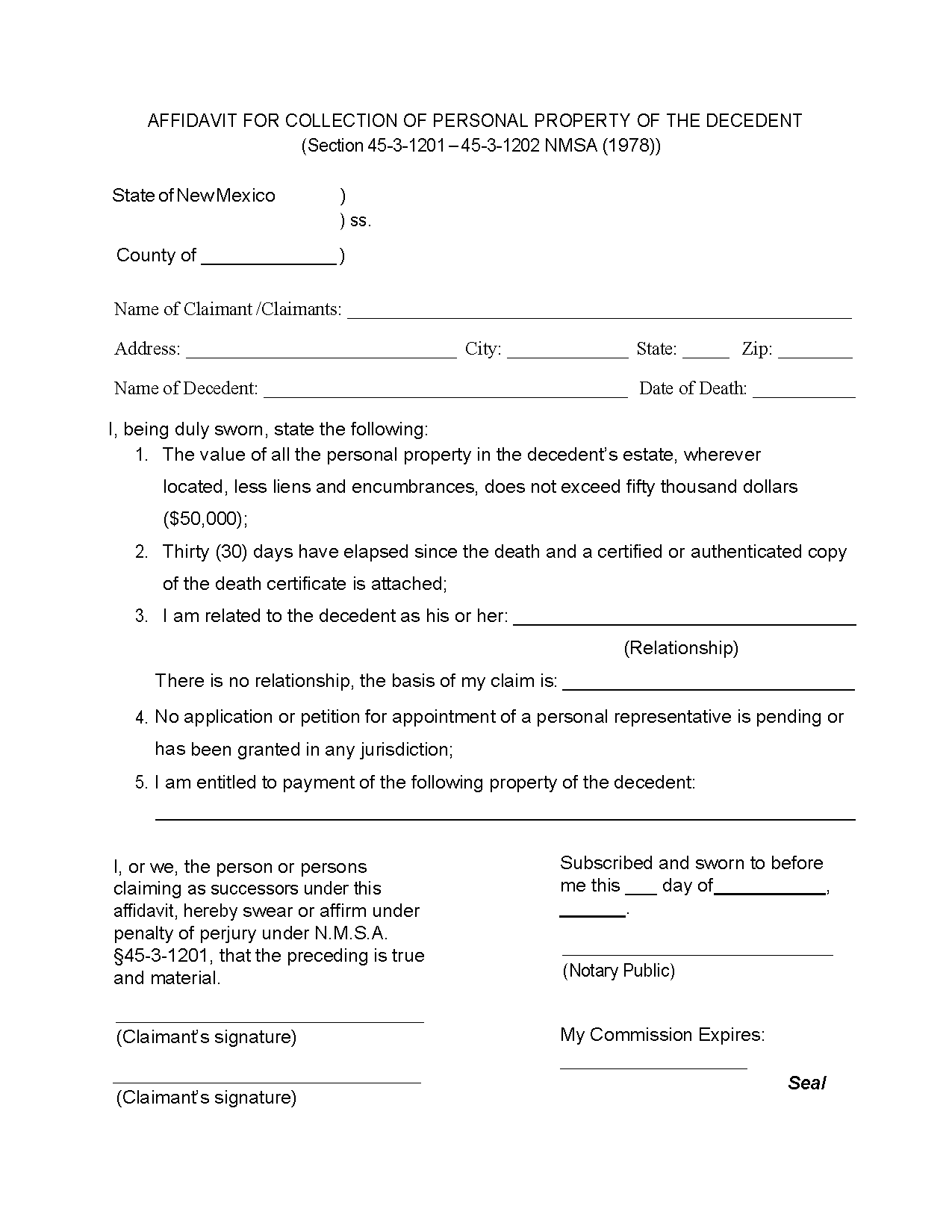
Individuals intending to use the affidavit must first ensure the estate meets the following criteria[3]:
- The individual (“claimant”) is entitled to the payment or property they intend to collect.
- The total value of the estate does not exceed $50,000 minus liens and debts and does not include real estate.
- At least 30 days have passed since the decedent’s death.
- A personal representative has not been appointed, and there is no pending application or petition.
Step 2 – Complete Affidavit
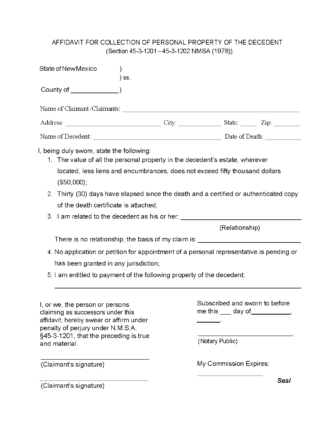
If the estate meets the criteria, the claimant can fill out the Affidavit for Collection of Personal Property of the Decedent, have it notarized, and attach a certified or authenticated copy of the decedent’s death certificate.
If the claimant is seeking to claim a vehicle, they should complete an Affidavit of Claiming Successor (MVD-10013).
Step 3 – Collect Property
The claimant will provide the completed Affidavit and death certificate to any parties in possession of the decedent’s property.