
 Create Document
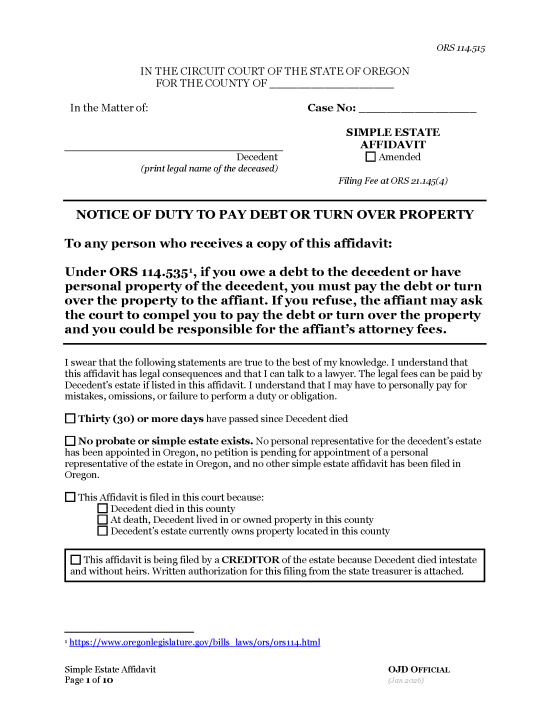
 Fill & Customize
 Basic Download
 Adobe PDF
Laws
- Maximum Estate Value: $275,000 ($75,000 for personal property, $200,000 for real property)[1]
- Mandatory Waiting Period: 30 days[2]
- Where to File: Circuit Court
How to File (5 Steps)
Step 1 – Check Requirements
The following conditions must be met to file a Simple Estate Affidavit[3]:
- 30 days have passed since the decedent’s death.
- The estate value doesn’t exceed $75,000 in personal property and $200,000 in real property.
- There are no other probate cases or personal representatives appointed for the estate.
- The affiant is an heir, devisee, creditor, or personal representative named in the will.
- The affiant is over 18 and has no criminal record.
Step 2 – File Affidavit
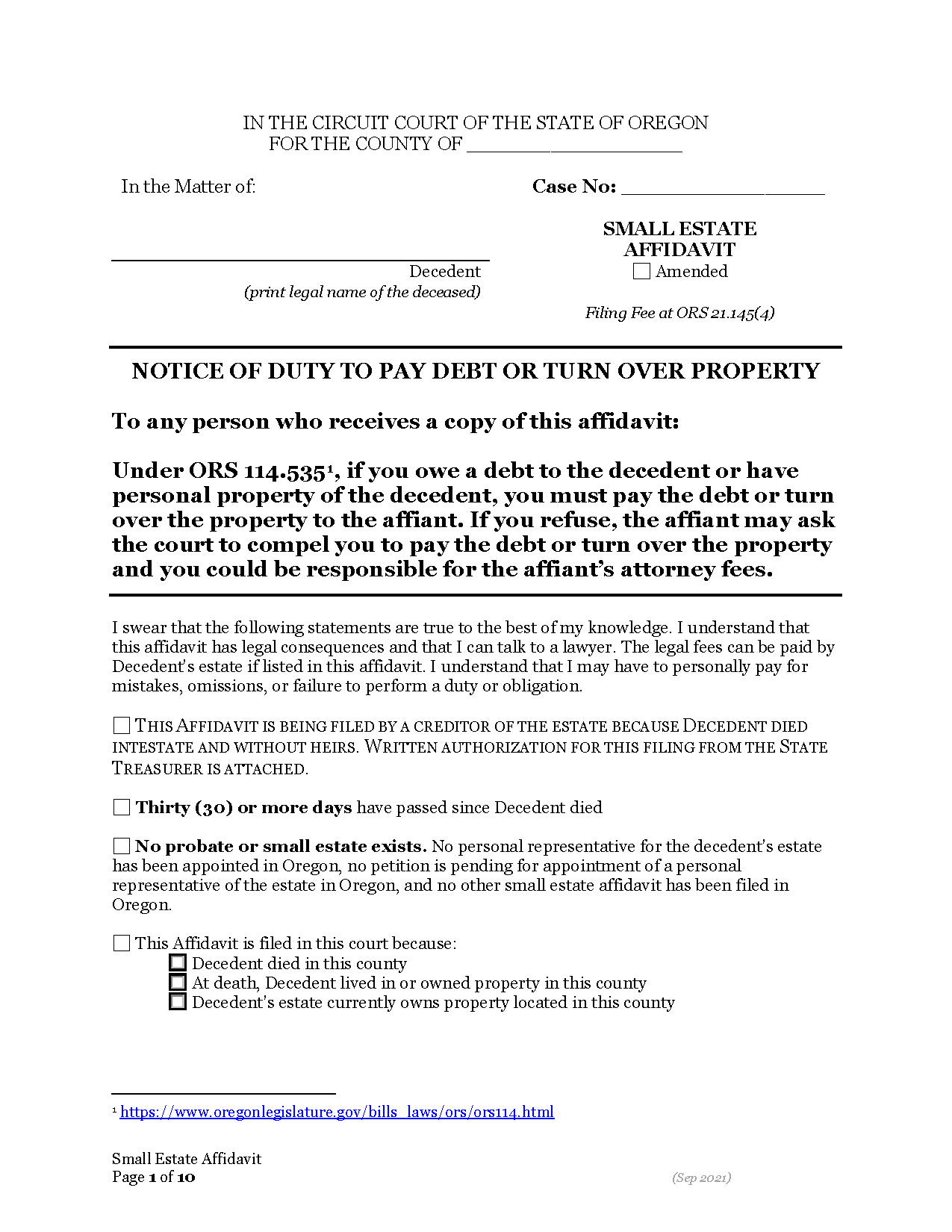
The Affidavit must be completed, signed before a notary, and filed with the circuit court clerk[4]. The form must have the death certificate and will attached, if any.[5] An Affidavit of Attesting Witness or Affidavit Regarding a Genuine Signature must be provided with a will.[6]
Step 3 – Send Notices
Within 30 days of filing, the affiant must send copies of the Affidavit and attachments to the estate’s beneficiaries, creditors, and any other required parties listed in the form.[7]
Step 5 – Distribute Estate
It is recommended to wait four months after the Affidavit’s filing before distributing the estate. Once this period passes, the affidavit can be used to collect assets and distribute them to the beneficiaries.[11]