
 Create Document
 Fill & Customize
 Basic Download
 Adobe PDF
Laws
- Maximum Estate Value: $15,000 (excluding tangible personal property)[1]
- Mandatory Waiting Period: 30 days[2]
- Where to File: Probate Court[3]
How to File (4 Steps)
Step 1 – Petition Requirements
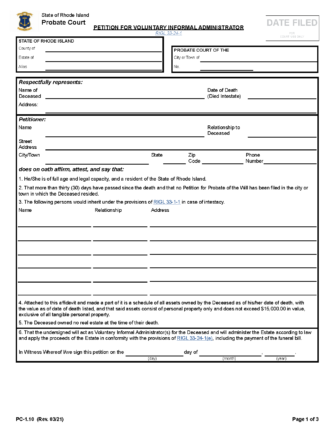
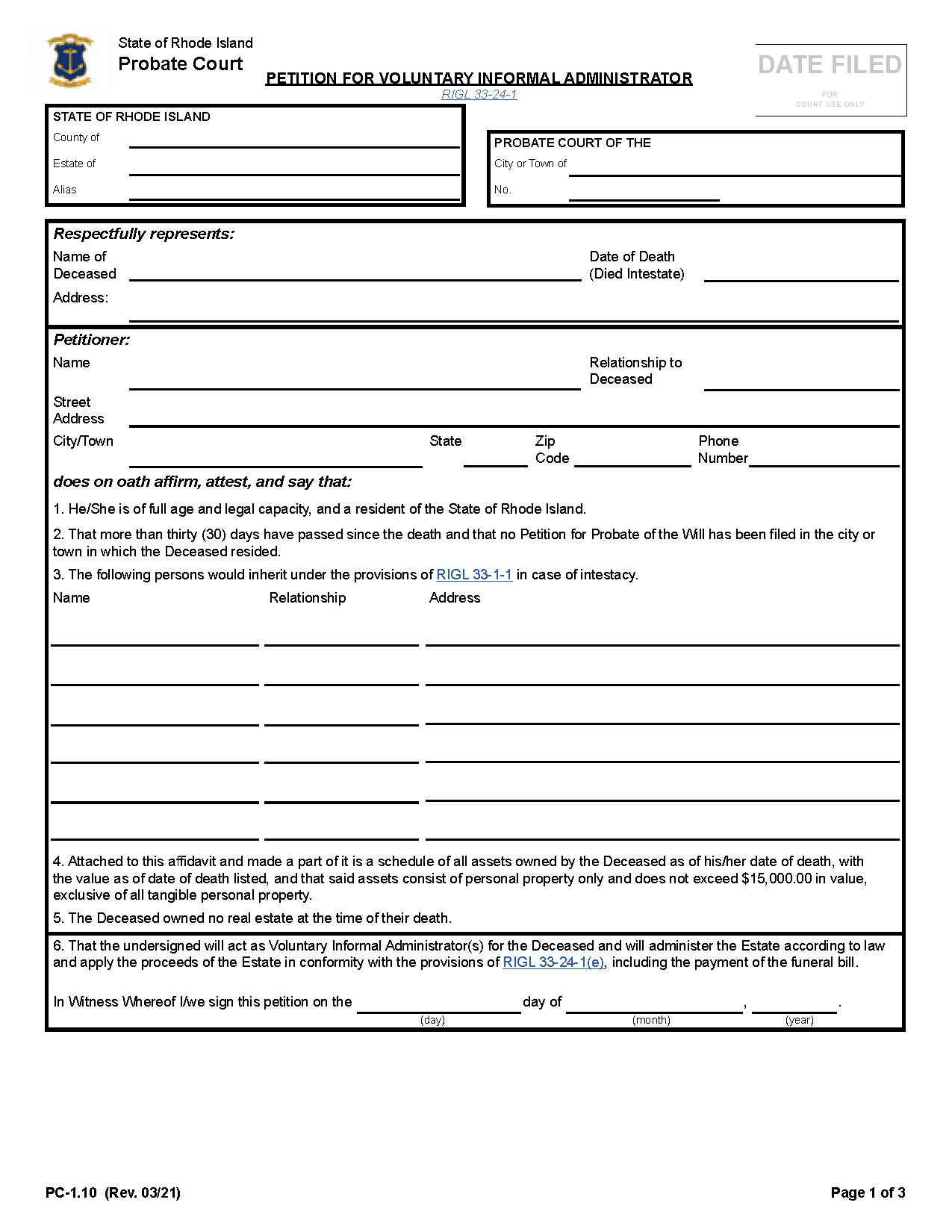
A Petition for Voluntary Informal Administrator (Form PC-1.10) can only be used if[4]:
- The decedent has been deceased for 30 days.
- The decedent did not own real estate.
- The total estate value, excluding tangible personal property, is $15,000 or less.
- The affiant is a Rhode Island resident.
- No Petition for Probate of the Will, petition for letters testamentary, or letters of administration are filed in the city/town where the decedent resided.
Step 2 – File Petition
The Petition and death certificate must be filed in the probate court of the city or town where the decedent lived.[5] If the affiant is the executor named in the will, the will and Petition for Voluntary Informal Executor (Form PC-1.9) are filed instead.[6] The clerk will then issue a Certification of Appointment. Fees apply to filing a Petition and obtaining a Certification.[7]
Step 3 – Collect Assets
The voluntary administrator or executor can present a copy of the Certification to collect the assets listed in the Petition from individuals or entities holding them.[8] Tangible and intangible property, such as money, accounts, stocks, and bonds, may be collected in this manner.
Step 4 – Settle Estate
The voluntary administrator or executor must settle the estate in the following order[9]:
- Funeral, medical, administration, and other estate expenses.
- The decedent’s debts.
- Distribution to surviving spouse or other heirs (or as indicated in will, if applicable).