
 Create Document
 Fill & Customize
 Basic Download
 Adobe PDF

Laws
- Maximum Estate Value: $50,000[1]
- Mandatory Waiting Period: 45 days[2]
- Where to File: Probate Court[3]
How to File (3 Steps)
Step 1 – Check Qualifications
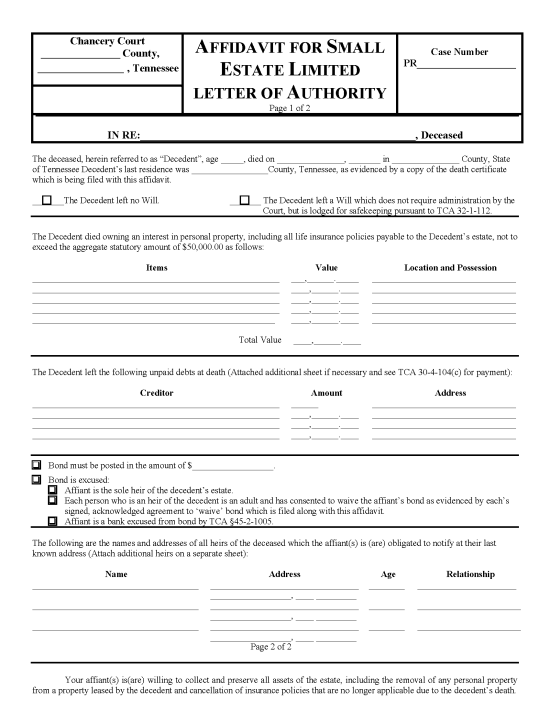
An Affidavit for Small Estate can be used if the estate value is under $50,000 and 45 days have passed since the decedent’s death. The Affidavit cannot be used for real estate or if a petition has been filed for the appointment of a personal representative.[4] The court may waive the 45-day waiting period requirement if good cause is shown.[5]
Step 2 – File Affidavit
After the waiting period has passed (if applicable), the affiant may complete the Affidavit and file it with the Probate Court in the county where the decedent lived.[6] The clerk will provide the affiant with certified copies of the Affidavit. Filing is subject to fees.
Step 3 – Pay Bond and Distribute Assets
The affiant is required to secure a bond equal to the estate value payable to the court clerk.[7] No bond is required if:
- The affiant is the sole beneficiary of the estate; or
- All adult beneficiaries provide written consent to the affiant serving without bond.
The affiant is automatically released from the bond liability one year after filing the Affidavit.[8] The certified copies may be used by the affiant to collect the decedent’s property from third parties and distribute it to the heirs[9].