
 Create Document
 Fill & Customize
 Basic Download
 Adobe PDF
Laws
- Maximum Estate Value:
- Mandatory Waiting Period: No filing required.
- Where to file: County Surrogate Court or Superior Court
How to File (4 Steps)
Step 1 – Check Requirements
The Affidavit of Assets and Administration can be used if:
- The decedent died intestate.
- The decedent’s total estate value is:
- $50,000 if there is a surviving spouse or domestic partner.
- $20,000 if the decedent was not survived by a spouse or domestic partner.
- If the affiant is not a spouse or partner of the decedent, written consent from all other heirs must be recorded in the Surrogate Court or the Superior Court.
Step 2 – Complete Affidavit
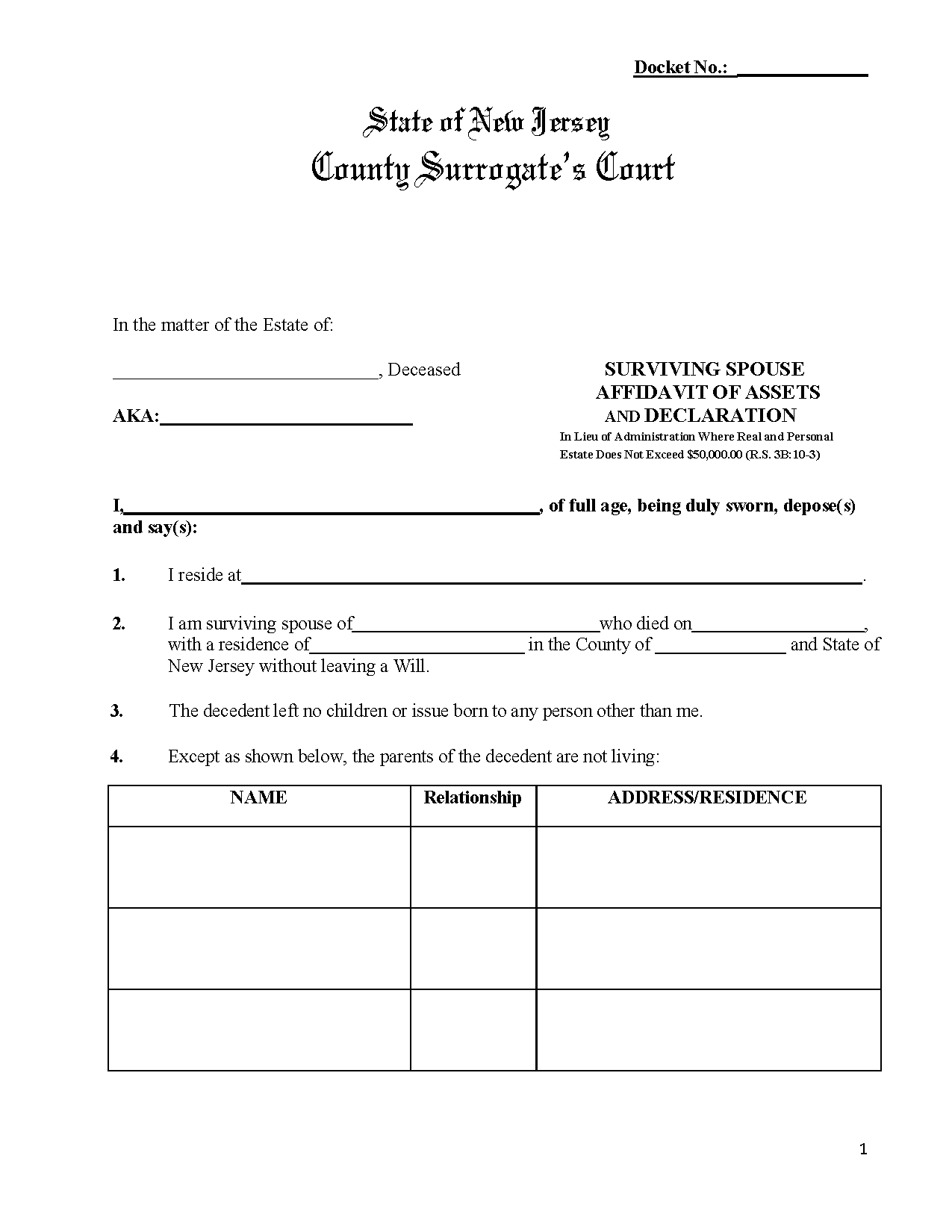
If the affiant is the surviving spouse or partner, they must complete the Surviving Spouse Affidavit of Assets and Declaration, which will list the decedent’s assets and their value.[3]
The Next of Kin Affidavit of Assets and Declaration form is to be used for estates where there is no surviving spouse or domestic partner.
These documents must be signed in the presence of a notary public.
Step 3 – Record Affidavit
The completed affidavit should be filed in the office of the surrogate court of the county where the decedent resided. If the decedent was not a resident of the state where they passed away, the affidavit may be filed in the office of the surrogate court of the county where any of their assets are located or in the superior court clerk’s office.