
 Create Document
 Fill & Customize
 Basic Download
 Adobe PDF
 Microsoft Word
 OpenDocument
By State
- Alabama
- Alaska
- Arizona
- Arkansas
- California
- Colorado
- Connecticut
- Delaware
- Florida
- Georgia
- Hawaii
- Idaho
- Illinois
- Indiana
- Iowa
- Kansas
- Kentucky
- Louisiana
- Maine
- Maryland
- Massachusetts
- Michigan
- Minnesota
- Mississippi
- Missouri
- Montana
- Nebraska
- Nevada
- New Hampshire
- New Jersey
- New Mexico
- New York
- North Carolina
- North Dakota
- Ohio
- Oklahoma
- Oregon
- Pennsylvania
- Rhode Island
- South Carolina
- South Dakota
- Tennessee
- Texas
- Utah
- Vermont
- Virginia
- Washington
- West Virginia
- Wisconsin
- Wyoming
Advantages of a Single-Member LLC Operating Agreement
- Clearly states how the business will run, so there’s no confusion
- Separates the owner from the business for liability reasons, reinforcing the corporate veil
- Customizes internal rules that override state-imposed default regulations
- Helps ensure the owner retains full control of the company
- Aids in future growth and change with investors and/or new members
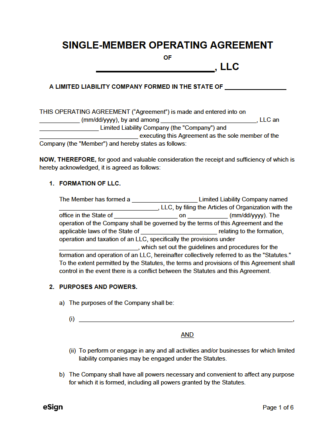
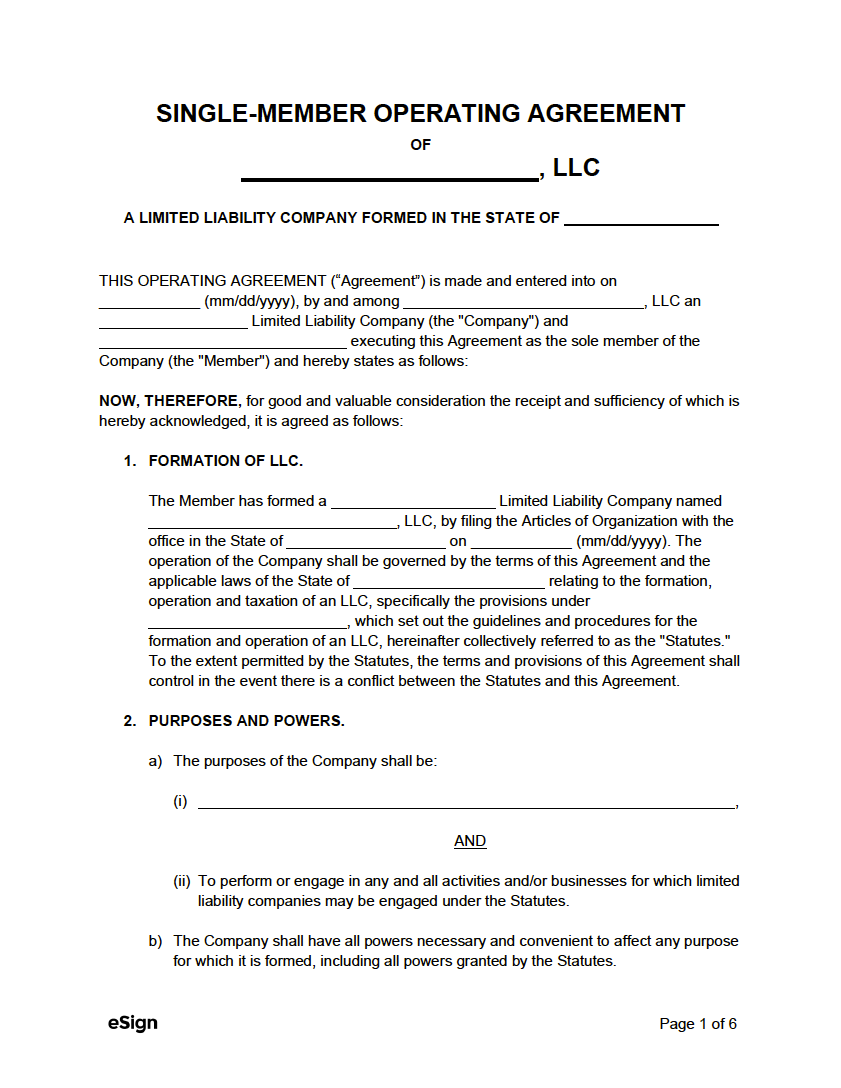
What’s Included

Most operating agreements for single-member entities will cover the following:
- Initial Details. The document will set forth the formal details of the LLC, including the company name, business purpose, duration, and registered office/agent.
- Owner/Member Details. The name of the owner and their rights/powers/responsibilities and treatment of their capital contributions are outlined in the agreement.
- Limitation of Liability/Indemnification. A primary function of the agreement is to reinforce the separation between the owner and their business, protecting the owner from the business’s liabilities and vice versa.
- Finances. The agreement outlines how the entity’s books, records, accounting, and tax matters are handled. It will also set forth how the member’s capital accounts will be managed.
- Death/Disability. An important provision regarding what will happen to the company in the event the sole member dies or becomes disabled is often included.
- Duration and Dissolution. How long the company will be maintained and under what terms it may be dissolved is generally stated.