
 Create Document
 Fill & Customize
 Basic Download
 Adobe PDF
By State
- Alabama
- Alaska
- Arizona
- Arkansas
- California
- Colorado
- Connecticut
- Delaware
- Florida
- Georgia
- Hawaii
- Idaho
- Illinois
- Indiana
- Iowa
- Kansas
- Kentucky
- Louisiana
- Maine
- Maryland
- Massachusetts
- Michigan
- Minnesota
- Mississippi
- Missouri
- Montana
- Nebraska
- Nevada
- New Hampshire
- New Jersey
- New Mexico
- New York
- North Carolina
- North Dakota
- Ohio
- Oklahoma
- Oregon
- Pennsylvania
- Rhode Island
- South Carolina
- South Dakota
- Tennessee
- Texas
- Utah
- Vermont
- Virginia
- Washington
- West Virginia
- Wisconsin
- Wyoming
Marriage and Divorce
In general, changing marital status can result in a name change without filing a petition.
Name Change After Marriage
Individuals may legally adopt their spouse’s surname when marrying. The new name can be provided on the marriage license application, which will appear on the marriage certificate.
Name Change After Divorce
To change a name after divorce, individuals may request to have their surname restored during the divorce proceedings. Their former name will appear on the divorce decree.
Passport and SSN Name Change
Eligibility Requirements
Specific eligibility requirements vary by state. The local authority (such as a court clerk) can be contacted to find out whether a name change is possible. In general, individuals must meet the following requirements:
- Must be 18 or older
- Must be a resident of the county where name change petition is filed
- Cannot be required to register as a sex offender
- Cannot be seeking name change for fraudulent purposes
How to Legally Change a Name
Name change procedures vary widely across states. The guide below provides a general outline only and may not be applicable in some states.
Step 1 – Prepare Forms
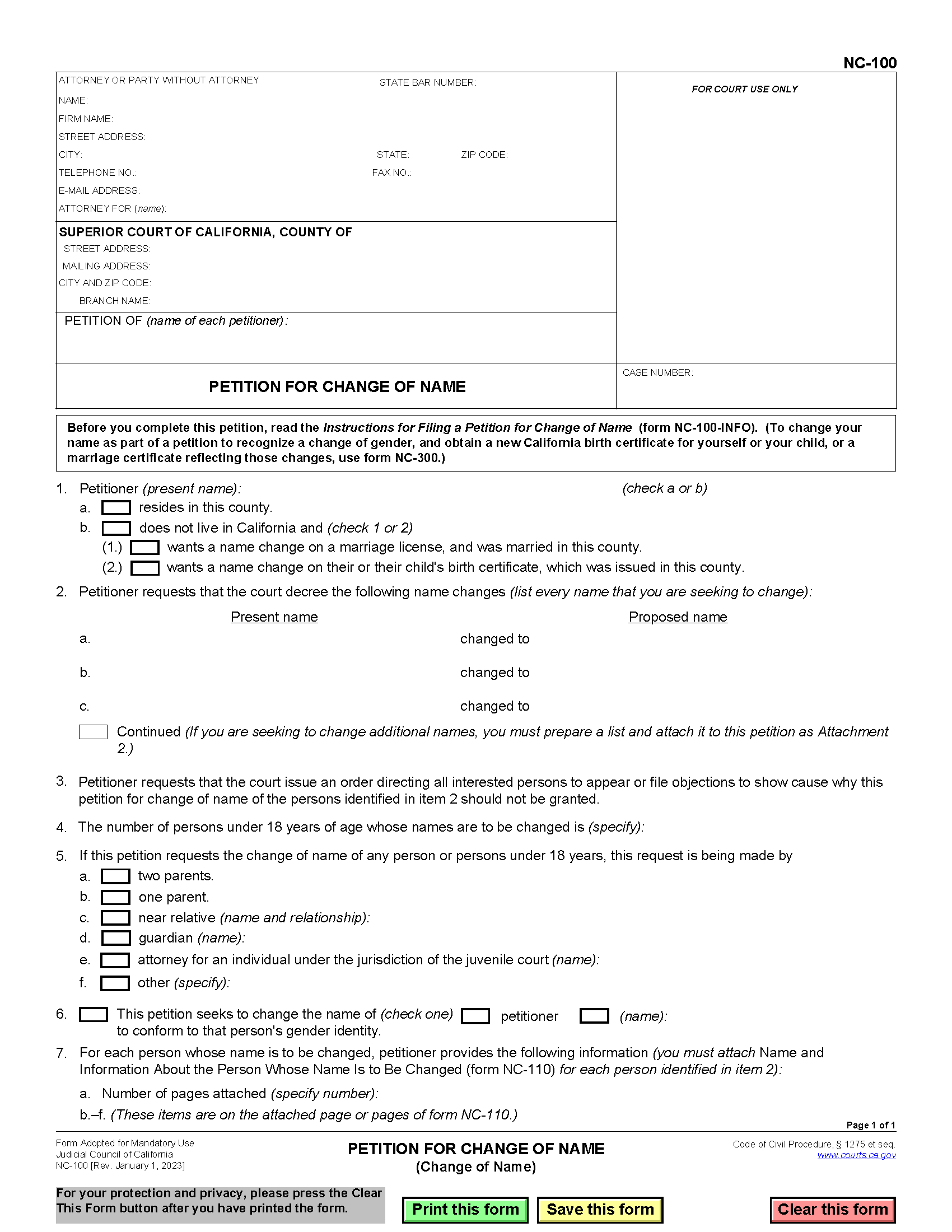
The individual must prepare the required forms, which typically include a petition of name change, notice of hearing, and order for name change. The petition may require notarization.
States may also require fingerprinting, background checks, or a cover sheet. The local court clerk can be contacted to verify which forms are needed.